Categories
Ranges
Collections
Collections
London & South East
Midlands
North
South West & Wales
All venuesDelivery locations
All delivery locations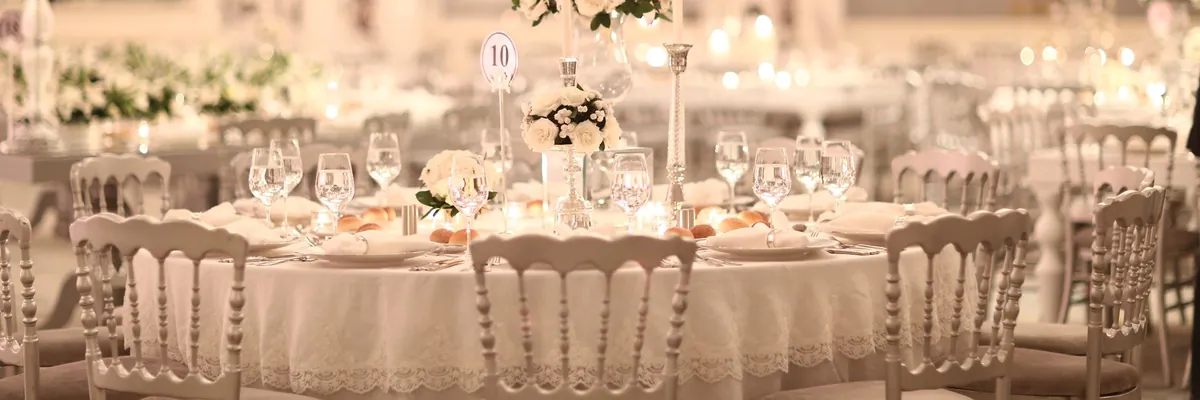
Count by event format, then add the right reserve
Count by event format, then add the right reserve
Lesson 4 of 9 in our free event planning lessons. Read it in about five minutes, then try the exercise with your own numbers.
| Event format | Base count | Reserve |
|---|---|---|
| Seated dinner | 1 chair per guest | 5% |
| Buffet | 60 to 70% of guests | 5% |
| Theatre style | 1 chair per guest | 10% standing room |
| Classroom style | 1 per delegate plus 1 per trainer | 5% |
| Boardroom | 1 per person | 2 spare |
Add 10% on conferences and training days for latecomers and VIPs, and 15% for outdoor events where rain can move guests under cover at short notice.
Our chair guide works through a 100-guest wedding breakfast:
A buffet for 200 guests needs chairs for 60 to 70% of them, which is 120 to 140 chairs. Add 5% and the order becomes 126 to 147 chairs.
Chiavari chairs suit weddings and formal dinners. Stacking conference chairs suit seminars where crews set out large numbers fast. Folding chairs suit outdoor ceremonies and overflow seating, and chairs with larger foot pads cope better on grass than narrow legs.
These lessons cover quantities, layout and logistics. They do not replace advice on gas, electrics, food safety or fire rules. For those, follow your venue's rules and ask a qualified person.