A five-tier champagne tower needs 55 saucer glasses and six to eight bottles of champagne. Glass counts by size, stacking steps, and how to pour without toppling it.
A five-tier champagne tower needs 55 saucer glasses and six to eight bottles of champagne. Glass counts by size, stacking steps, and how to pour without toppling it.
Planning a large-scale event requires precise coordination. Organisers frequently ask about the logistics of building a glass pyramid. Understanding the how to make a champagne tower hire arrangement for your specific venue involves calculating glass quantities, selecting the correct table, and managing the pour. Careful number planning prevents structural failures during corporate celebrations or grand weddings.
Creating a stable structure demands more than stacking glasses and pouring sparkling wine. The process starts with a solid, level surface capable of supporting the full weight of the glass and liquid. Protect the area beneath the table with a heavy-duty tray or waterproof cover to catch spills. Keep a large ice bucket close by to chill the bottles before the pour. Adding LED lighting around the base highlights the glass structure and draws attention to the display.
The type of glass dictates the stability of the entire structure. Champagne saucers remain the preferred choice for towers. Saucers feature a wide, shallow bowl that provides a broad centre of gravity, making them highly appropriate for stacking. Flutes lack this wide base and carry a high centre of gravity, making them unsuitable for multi-tiered structures.
Consider the volume capacity of the glasses. Saucers typically hold about 4.5 ounces of liquid, which is less than the standard flute. This reduced capacity means you must adjust the total volume of sparkling wine purchased for the event. Opting for saucers adds visual appeal and keeps the structure steady throughout the reception.
Glass quality affects the final presentation. A well-made saucer reflects light better and provides a uniform stacking surface. Expo Hire stocks high-quality champagne saucers for commercial events. Our glassware hire inventory includes options for events of any size. Our catering equipment hire service supplies the exact items needed for large-scale beverage service. Browse our champagne glassware selection for the full inventory of champagne glasses for hire.
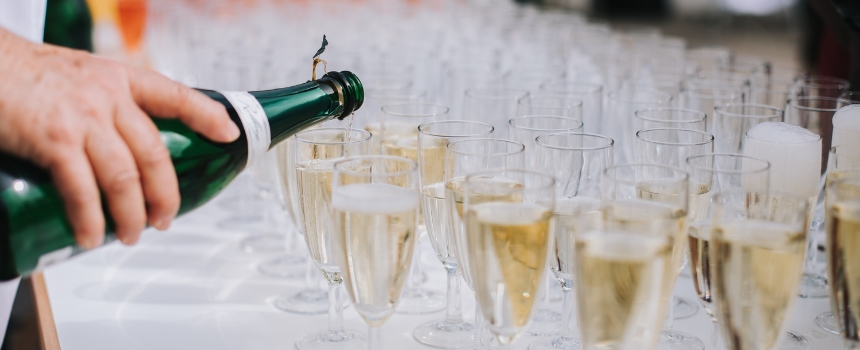
Underestimating the required volume of sparkling wine causes incomplete pours. A classic five-tier tower uses 55 glasses. Plan for six to eight standard 750ml bottles to achieve a generous cascade effect for a five-tier setup. Smaller three-tier towers use 14 glasses and require two to three bottles. Chill the bottles to between 8 and 10 degrees Celsius before pouring. Cold liquid pours with less foam disruption. Always keep an extra bottle on hand for top-ups or specific toasts.
Larger towers demand significantly more liquid. A six-tier tower requires 91 glasses and approximately 11 bottles. A seven-tier tower uses 140 glasses and needs 17 bottles. An eight-tier tower takes 204 glasses and 24 bottles. A nine-tier tower needs 285 glasses and 33 bottles. A ten-tier tower requires 385 glasses and 45 bottles. Calculate the exact volume based on the 4.5-ounce capacity of the saucers, factoring in a 15 percent allowance for spillage during the cascade.
Beyond glasses and bottles, specific tools prevent rickety setups. Start with a completely level surface. A rented pedestal table works well for visibility and accessibility. Place a non-slip mat or slightly damp cloth beneath the base glasses to stop sliding. A magnum or jeroboam bottle offers better control than standard bottles during the initial pour. A small step stool gives the pourer safe access to the upper tiers of taller structures. Prepare for spills with absorbent linen under the display. Keep a stack of backup glasses nearby, calculating at least 10 percent extra to cover breakages. Expo Hire supplies champagne tower kits that bundle glasses, pouring trays, and stabilisers.
Review this logistical checklist before building the structure:
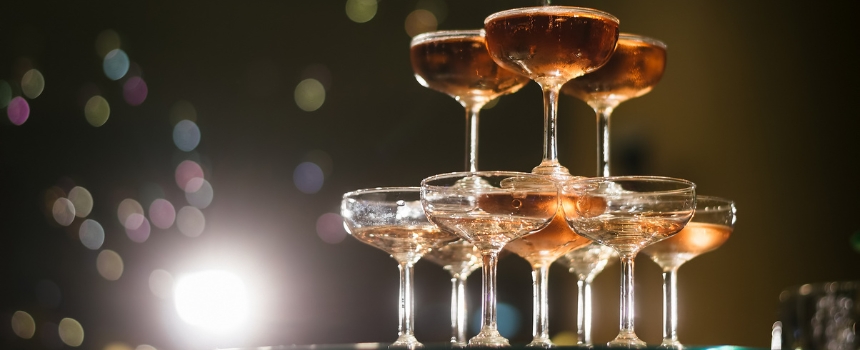
Building a glass pyramid requires methodical preparation. Having a clear plan saves time during the venue setup phase. Following a strict protocol prevents structural collapse. Read this guide to understand the mechanics of a well-built glass structure.
The base layer forms the foundation of the entire structure. Deciding on the width of this layer dictates the total glass count. A base layer of five by five glasses requires 25 glasses. A base layer of six by six requires 36 glasses.
The scale of the event dictates the size of the base layer. A larger base creates a taller structure but requires more glasses and more liquid. Balance the visual impact against the available budget and floor space.
Assess the space available at the venue. You need a stable and level surface to support the weight. Many venues lack appropriate heavy-duty tables. Expo Hire stocks commercial-grade tables through our furniture hire inventory. Position the table on a hard floor rather than thick carpet to maintain absolute stability.
Once the base layer sits completely flush, begin building upwards. Each subsequent layer has one less glass in each dimension than the layer below it. A five-by-five base supports a four-by-four second layer, followed by a three-by-three third layer, a two-by-two fourth layer, and a single glass on top. This geometric shape provides maximum stability.
Centre each glass over the diamond-shaped gap created by the four glasses below it. The stem of the upper glass must sit exactly in the middle of the four rims beneath it. Take your time with this process. Rushing leads to misalignment, which compromises the entire structure.
Pouring the liquid requires a steady hand and a controlled flow rate. Begin pouring directly into the top glass. Pour at a consistent, moderate speed. Pouring too fast causes the liquid to bounce out of the top glass and miss the lower tiers. Pouring too slow prevents the liquid from cascading evenly over the edges.
Continue pouring into the top glass until the liquid overflows and fills the second tier. Keep pouring until the second tier overflows into the third tier. Maintain the flow until the base layer fills completely. Switch bottles carefully to avoid knocking the structure. Use a step stool for towers exceeding five tiers to maintain a downward pouring angle.
Disassembling the structure requires as much care as building it. Start from the top and work downwards. Remove one glass at a time. Hand the glasses to a colleague to place on a waiting tray. Do not attempt to carry multiple glasses at once.
Cleaning hundreds of sticky glasses consumes hours of staff time. Expo Hire eliminates this problem with our "Send It Back Dirty" service. Pack the used saucers back into their original delivery crates. We handle the washing at our Birmingham depot using commercial tunnel washers. This service applies to all our crockery hire and cutlery hire items as well.
Selecting the correct location within the venue prevents disasters. Avoid placing the table near main entrances, dance floors, or thoroughfares leading to the toilets. High-traffic areas increase the risk of guests bumping the table.
Inspect the flooring before setting up the table. Hardwood, concrete, or tightly woven carpet tiles provide a solid foundation. Thick, plush carpets compress unevenly under weight, causing the table to lean. Use a spirit level to check the table surface. Adjust the table legs or use wooden shims to correct any slope. A slope of just one degree causes the liquid to cascade down one side of the pyramid, leaving the opposite side completely dry.
Consider the ceiling height and lighting fixtures. A ten-tier tower sits very high, especially when placed on a standard poseur table. Check for low-hanging chandeliers or decorations that might interfere with the pourer's headroom. Position the table under a spotlight to make the glassware sparkle.
Professional event builders use specific techniques to guarantee stability. Wash and dry your hands completely before handling the glassware. Natural oils from human skin transfer to the glass stems, making them slippery. Some professionals wear white cotton gloves to maintain grip and prevent fingerprints on the bowls.
Inspect every single glass before placing it in the structure. Reject any glass with a chipped rim, a bent stem, or an uneven base. A single warped glass throws off the alignment of the entire tier above it. Expo Hire checks all glassware before dispatch, but transit vibrations occasionally cause minor issues. We include a Free Minor Damage Waiver on every order to cover accidental breakages during your event.
Build the structure as close to the serving time as possible. Leaving a fully built glass pyramid unattended for hours increases the risk of accidental damage. Rope off the area with stanchions and velvet ropes to keep guests at a safe distance if you must build it early.
Understanding the fluid dynamics of the cascade helps you manage the pour. The liquid flows over the lowest point of the glass rim. Perfect levelling guarantees an even 360-degree cascade. All the liquid flows over one side if the table leans slightly.
Temperature plays a massive role in the fluid dynamics. Warm sparkling wine produces excessive foam. The foam acts as a barrier, preventing the liquid from flowing into the lower glasses. Chill the bottles to exactly 8 degrees Celsius. Keep the bottles in ice buckets right up until the moment of pouring.
The sugar content of the wine also affects the flow. Sweeter wines have a higher viscosity and flow slower than dry, brut varieties. Factor this into your pouring speed. A slower pour works better for sweeter wines, while a slightly faster pour suits dry wines.
Sparkling wine remains the traditional choice, but other beverages work equally well for different event types. Corporate morning events often use prosecco or non-alcoholic sparkling cider. The carbonation provides the same visual effect without the alcohol content.
Cocktail towers offer a modern twist on the classic setup. Espresso martinis, cosmopolitans, or brightly coloured mocktails create a striking visual display. Pre-mix the liquid in large batches and pour from a jug rather than a bottle when using cocktails. This guarantees a consistent colour and flavour profile throughout the entire structure.
Avoid beverages with heavy pulp or large garnishes. Pulp clogs the rims of the glasses and disrupts the cascade. Keep the liquid smooth and free-flowing. Place garnishes in the glasses before building the structure if required. A single raspberry or a twist of lemon peel in each glass adds colour without affecting the flow.
Budgeting for a glass pyramid involves more than just the cost of the alcohol. Factor in the cost of the glassware hire, the table hire, and the drip trays. Expo Hire displays all prices live on the website, allowing you to calculate exact costs without waiting for a quote.
Calculate the cost of the liquid based on the total volume required, not just the number of bottles. A standard bottle holds 750ml, which equates to roughly 25 ounces. A five-tier tower uses 55 glasses, requiring 247 ounces of liquid. This equals exactly 9.88 bottles. Always round up and add a 15 percent buffer for spillage.
Consider the labour costs associated with building and dismantling the structure. A large ten-tier tower takes two experienced staff members over an hour to build accurately. Factor this time into your staff rotas. Using our "Send It Back Dirty" service reduces your post-event labour costs significantly, as your staff do not need to wash hundreds of sticky glasses.
Timing the pour correctly maximises the visual impact. Schedule the pour during a natural break in the event proceedings. The conclusion of the speeches or the arrival of the guests of honour provides the perfect moment.
Announce the pour to the guests beforehand. Give the photographer ample time to set up their lighting and find the best angle. The pour itself takes several minutes for a large structure. Play upbeat, celebratory music during the pour to build the atmosphere.
Allow guests to take glasses from the outer edges of the base layer first once the pour finishes. Instruct the catering staff to dismantle the upper tiers and hand the glasses to the guests. Do not let guests pull glasses from the middle of the structure, as this causes immediate collapse.
Spillage forms an unavoidable part of the cascade process. The liquid must overflow the rims of the glasses to reach the lower tiers. A significant amount of liquid misses the glasses entirely and falls straight to the table.
Place a heavy-duty, waterproof drip tray under the base layer. The tray must extend at least ten centimetres beyond the edge of the base glasses. A standard plastic serving tray lacks the depth to hold the spilled liquid. Use a deep-sided commercial drip tray.
Cover the drip tray with absorbent linen to prevent the spilled liquid from splashing back up onto the glasses. Expo Hire supplies a range of table coverings through our linen hire section. Keep extra towels hidden under the table to mop up any splashes that miss the tray.
Managing hundreds of fragile glasses requires careful logistical planning. Expo Hire delivers all glassware in stackable, commercial-grade plastic crates. These crates feature individual compartments for each glass, preventing breakages during transit.
Store the crates in a safe, dry area until you are ready to build the structure. Do not stack the crates too high, as this makes them difficult to move safely. Use a sack barrow or a flatbed trolley to transport the crates from the delivery point to the setup location.
Place the dirty glasses back into their specific compartments after the event. Do not force glasses into compartments that are too small. Our live vehicle tracking system sends an SMS with an ETA on the day of collection, allowing you to have the crates ready at the loading bay.
Booking the equipment for your event requires accurate numbers and reliable delivery. The how to make a champagne tower hire process through Expo Hire operates entirely online. You do not need to make a phone call or wait for a sales representative to email a quote.
Navigate to the glassware section on our website. Select the champagne saucers and enter the exact quantity required for your calculated tiers, plus the 10 percent backup allowance. Add the necessary tables, drip trays, and linen to your basket.
Our system calculates the delivery fee based on the road distance from your nearest depot. Delivery starts from £40 ex-VAT. We operate 11 regional depots across England and Wales, with our primary depot located in Birmingham. You can also choose warehouse self-collection from Birmingham between 7am and 3pm, Monday to Friday.
Sourcing commercial-grade equipment for large events requires a reliable supplier. Expo Hire operates as the UK's first fully online event hire company. We supply professional event organisers, independent caterers, venue managers, and corporate event teams. We do not supply domestic consumers.
We do not require a security deposit for your order. Orders over £500 qualify for a 25 percent advance deposit option to secure the booking. Our EventPro® own-brand range features furniture constructed specifically for the hire trade, built to withstand the rigours of commercial use.
Named clients including the BBC, ITV, HSBC, Cambridge University, and the Commonwealth Games trust our equipment for their events. We display a live Trustpilot widget on our site, showing real feedback from professional buyers. Prices and live stock levels update in real time. Select your hire dates to check availability and confirm your order online today.
For more planning help, see the Glassware Hire Guide.
Choose from our vast range of catering hire, furniture hire and exhibition hire products. Select from the categories listed below or use our great search function above.