The right number of chairs is almost always more than your confirmed headcount. This guide covers how to calculate chair quantities for every common event layout.
The right number of chairs is almost always more than your confirmed headcount. This guide covers how to calculate chair quantities for every common event layout.
The most common mistake planners make with seating involves ordering exactly to headcount. This leaves zero room for unexpected arrivals, setup accidents, or guests needing extra space. Determining exactly how many chairs for an event hire order requires a strategic buffer. The correct number always exceeds your confirmed attendance list. Professional organisers understand that a tight seating plan creates unnecessary stress on the day. Sourcing commercial-grade equipment from our EventPro® range guarantees uniformity, but you still need the right quantities to execute your floor plan.
Start with one seat per confirmed guest, then add a five to ten percent buffer. Ordering 105 to 110 seats covers a 100-person guest list. Extra seating costs very little relative to the total order value. This buffer covers situations involving uncounted arrivals or last-minute layout changes. Events exceeding 200 guests require only a five percent margin to provide adequate cover without inflating the final invoice. Planners managing large corporate functions often face last-minute VIP additions. Having spare inventory on site prevents embarrassing delays while staff search the venue for spare furniture.
Events featuring both a ceremony and a reception present distinct seating requirements. Planners typically arrange ceremony seating in rows facing a focal point. Reception seating surrounds dining tables. You must source two separate sets or schedule a complete room changeover. Moving furniture between phases takes time and labour. Count each phase separately. Do not assume the same items will serve both functions without a dedicated gap for rearrangement. Expo Hire includes a free minor damage waiver on every order, covering the inevitable scuffs that happen during rapid room turnarounds.
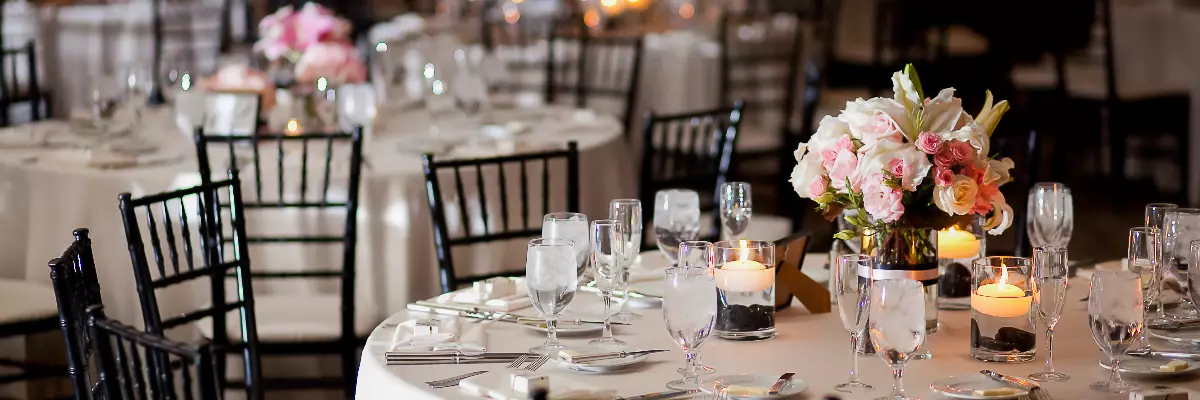
Formal seated dinners require an exact match to your guest count plus your standard buffer. Round tables represent the most common dining format. A standard 5ft (150cm) round table seats eight guests while leaving room for centrepieces. A 6ft (180cm) round table seats ten. Planners using long rectangular tables must allocate roughly 60cm of table length per person, placing seats on both sides. You must also factor in the space required for catering staff to move between tables. Leave a minimum of 1.5 metres between table edges to allow safe passage for waiters carrying hot food. You can browse our full table hire inventory to match these dimensions.
Conferences and lectures require straight rows facing a stage or screen. Count one seat per attendee. Venues mandate a central aisle and at least one side aisle to meet fire regulations. Delegates frequently leave their spots during breaks and return later. You do not need a buffer for absenteeism in this scenario. Every delegate requires a dedicated spot while the session runs. Planners must also consider sightlines to the main screen. Avoid placing seats directly behind structural pillars or AV equipment towers.
Theatre layouts resemble conference setups but feature tighter row spacing. Planners place seats closer together because the format lacks tables. This arrangement fits more people per square metre. Count one seat per attendee. Plan the room carefully, as theatre layouts prove difficult to adjust after completion. Venue managers possess the exact maximum capacity figures for theatre layouts in their specific spaces. Strict fire safety rules govern the maximum number of seats allowed in a single unbroken row. Consult your venue regarding their specific gangway requirements before finalising your floor plan.
Cocktail receptions and standing events do not require a seat for every guest simultaneously. Attendees circulate and rest at intervals. Professional organisers typically provide seating for fifty percent of the total headcount. Fifty seats scattered around the room will accommodate a 100-person drinks reception. Events running longer than two hours demand higher quantities, as the need for rest increases over time. Mixing low seating with high bar stools around poseur tables creates distinct zones for conversation.
Ground conditions dictate the correct furniture choices. Folding models and lightweight stacking options work best on grass. Heavier banqueting models sink or become unstable on soft earth. Hard surfaces like patios or marquee flooring support banqueting and Chiavari styles without issue. Standardise on a folding model for mixed-ground venues to avoid splitting your chair hire order across multiple distinct types. Outdoor functions also require contingency planning for bad weather. Verify your marquee or indoor backup space holds enough capacity to accommodate your entire seating inventory.
Top tables for speakers, wedding parties, or VIPs require separate counting. These setups typically run along one side only, featuring seats on the guest-facing edge. Allocate roughly two seats per metre of table length. A 6ft (180cm) table takes four people. A 10ft (300cm) table takes six. Track the top table count as a fixed number rather than including it in your general seating buffer. Elevating the top table on a staging platform improves visibility for the rest of the room.
Large gatherings above 200 guests justify a small over-order. Ten extra seats cost very little in the context of a major corporate function. Running short at the exact moment attendees arrive creates a highly visible problem. Fixing a shortage on the day proves nearly impossible. Planners dealing with uncertain headcounts must calculate how many chairs for an event hire order based on maximum possible attendance. You can adjust quantities with Expo Hire up to a few days before your scheduled delivery date.
Orders exceeding 100 items require booking at least two weeks before the function. Warehouse teams need advance notice to pick and load large quantities. Popular styles sell out during peak summer and winter seasons. Expo Hire requires no security deposit for any order, allowing you to secure your inventory early without tying up excess cash. You can view live stock levels directly on our website to confirm availability before committing to a specific style. We also offer a 25% advance deposit option on orders over £500 to help manage your cash flow.
Expo Hire supplies folding, banqueting, Chiavari, and cross-back styles for commercial functions. We operate 11 regional depots to serve venues throughout the country. Delivery starts from £40 ex-VAT, calculated by road distance from your nearest depot. Our dry hire model means items arrive clean and tested, ready for your team to position. We provide live vehicle tracking and an SMS ETA on your delivery day, keeping your site manager informed. You can collect your order directly from our Birmingham headquarters Monday to Friday between 7am and 3pm.
Browse our complete inventory of furniture hire, linen hire, crockery, glassware, and catering equipment. Our Send It Back Dirty service covers all crockery and glassware, saving your team hours of washing up. All prices display live on the site alongside real-time stock availability. Select your required items, choose your dates, and complete your booking entirely online.
Choose from our vast range of catering hire, furniture hire and exhibition hire products. Select from the categories listed below or use our great search function above.