Your Guide to Event Venue Capacity & Layout Planning
Your Guide to Event Venue Capacity & Layout Planning
Working out how many guests a room can hold — and what furniture to put in it — is one of the first questions any organiser faces. This guide covers table types and their footprints, chair styles and how they affect perceived space, service access and flow, and outdoor setups.
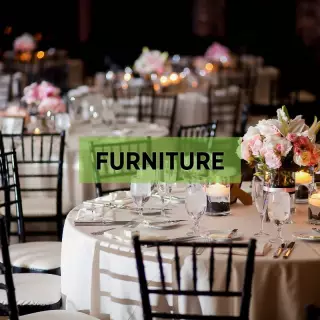
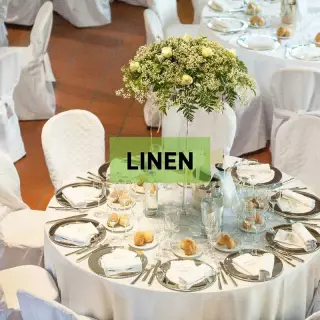
A 6ft round banqueting table seats 10 guests. These are the standard choice for dinners and awards nights — they promote conversation and give caterers clear routes between covers. Aim for around 3ft between table edges to allow guests and servers to move freely. For a formal sit-down dinner, seat roughly 70–80% of your total guest count at tables; the remainder may be standing, in lounge areas, or arriving in waves. A standing reception fits more people in the same space but needs poseur tables and bar stools throughout.
The chair you choose affects the perceived size of the room. A slim Chiavari chair takes up less room than a padded banqueting chair. The Wishbone chair is a good middle ground — contemporary but not oversized. For rustic settings, the Cross Back chair in oak suits barn venues and garden receptions. Allow around 2ft per person at a round table for elbow room and enough space to pull the chair in and out.
A 6ft trestle table seats 6–8 guests and works well for long communal rows, head tables and buffet lines. For a long banquet, arrange them end-to-end with clear access at each end so guests can reach their seats. For buffets, leave access from both sides of the table where possible so the queue does not block the room. Allow roughly 2.5ft × 5ft of floor space per person at a rectangular table, including circulation on both sides.
Think about where guests enter and where the bar is. Guests move towards the bar, so placing it where that footfall crosses the dining room causes congestion. A buffet table needs a clear 4ft walkway along the service side so guests can queue without blocking the main room. Poseur tables near the entrance create a natural mingling zone for guests arriving before dinner without using up dining floor space.
Sofas and lounge seating take up more floor space than chairs but change the feel of a room. Group them to create conversation areas away from the main dining or presentation zone. A sofa arrangement needs around 4ft of clear space around it so guests do not feel hemmed in. Bean bags suit younger or more casual crowds and are easy to move when the layout changes.
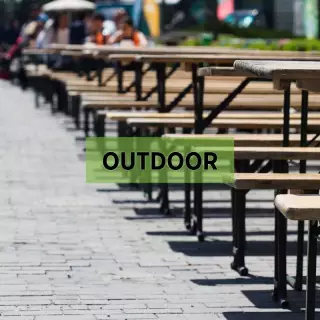
Outdoor furniture is designed for the elements — aluminium and treated rattan hold up to rain and direct sun. For evening events, patio heaters are the most important addition: they keep outdoor spaces usable well after dark. Position heaters close to where guests gather, not spread evenly across an empty lawn. Gazebo hire gives essential cover to outdoor bars, catering points and ticket desks.
For exhibitions, clear pathways matter as much as the stands themselves. Busy exhibition halls need walkways at least 5ft wide. Use exhibition furniture — counters, display tables and showcases — to define stand boundaries. Barriers manage queues at product demo points. For networking zones, a mix of round tables and poseur tables keeps guests circulating rather than settling in one spot.
How do I calculate maximum capacity?
It depends on the event type and furniture layout. A seated dinner needs significantly more space per person than a standing reception. Your venue may have a stated capacity, but this rarely accounts for specific furniture arrangements. Use the table and chair dimensions on our product pages to model your floor plan.
What is dry hire?
Dry hire means we supply the equipment — furniture, tableware and so on — for your team to arrange and manage. We deliver and collect, but we do not provide staff, setup services or catering.
How much space is needed around tables?
For round tables, aim for around 3ft between the edge of one table and the next. For rectangular tables or buffet lines, 4–5ft is better for clear circulation and service access.
For current stock and pricing, see our chair hire page.
"Very efficient and good quality stuff. Good communication."
"10 out of 10 for reliability. had a message that I was next in line for delivery and items with me 20 mins later. Web site was easy to use for the items I needed. Would use again no problem"