Calculating hire quantities before placing an order saves money and avoids shortfalls on the day. The formulas below apply to most event formats across England and Wales.
Calculating hire quantities before placing an order saves money and avoids shortfalls on the day. The formulas below apply to most event formats across England and Wales.
Quantity errors create problems fast. Order too little and the gap shows up on the day. Order too much and you pay for stock that never gets used. The safest approach is to base each category on a simple formula, then add a small buffer where the event format creates a real risk of running short. That gives you a list you can explain, adjust, and check against the layout before the order is confirmed.
The formulas below come from the source guide and apply to many event formats across England and Wales. They do not replace a floor plan, but they give you a strong starting point for tables, chairs, crockery, glassware, linen, and buffet equipment.
The source formula is simple: divide the number of guests by the number of seats per table, then round up. For 120 guests at tables of 10, that gives 12 tables. For 80 guests at tables of 8, that gives 10. Always round up. An extra table is easier to absorb than a seating plan that runs out of places halfway through the room.
That count only covers guest seating. It does not include a top table, registrar table, DJ table, drinks point, or buffet surface. Those extras need their own line items because they serve different functions and often need different shapes or sizes.
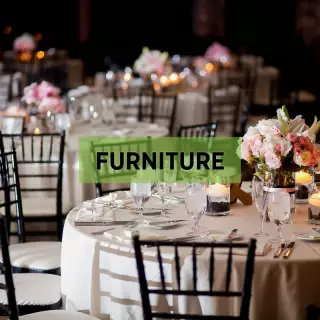
The source guide uses guests plus 10 percent for chair quantities. For 100 guests, that gives 110 chairs. That margin covers damage in transit, small layout changes, and guest numbers that shift after the first draft of the seating plan. It also helps when you need a few extra seats for corners of the event that were not obvious at the start.
The guide also points out that some chairs sit outside the main guest count. A registrar table, top table, or DJ position still needs seating. If staff, presenters, or musicians need chairs during the event, add them directly rather than hoping the buffer will cover everything.
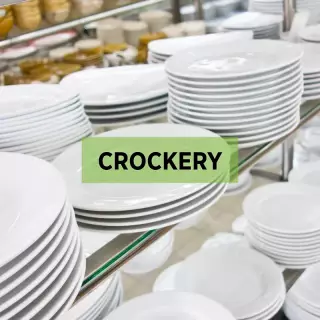
The crockery formula in the source content multiplies guests by the number of courses, then adds a 15 percent breakage buffer. For 80 guests at a three-course dinner, that gives 240 pieces before the buffer and 276 after it, which the guide rounds to 280. For a two-course lunch for 60 guests, the same method gives 138 pieces from a base of 120.
This works because one guest may use several pieces across the meal. A simple headcount misses that. Expo Hire's crockery hire range is available in quantities that suit both small and large orders, but the formula only works if you count the meal properly first.
The source guide gives 2 to 3 glasses per guest as a working multiplier, then shows how the event format changes that. A simple one-wine dinner can sit at one wine glass and one water glass per person, or 2x guests. A drinks reception followed by dinner needs more. The source example uses 1.5 champagne flutes per person for a one-hour reception plus 2 glasses per person for dinner, taking the multiplier to 3.5 across the evening.
Expo Hire's glassware hire range covers champagne flutes, wine glasses, water glasses, and highballs. The right count depends on how many different drinks services the event includes, not only on how many people are in the room.
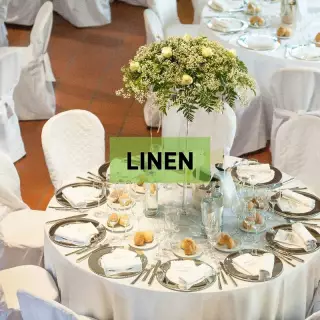
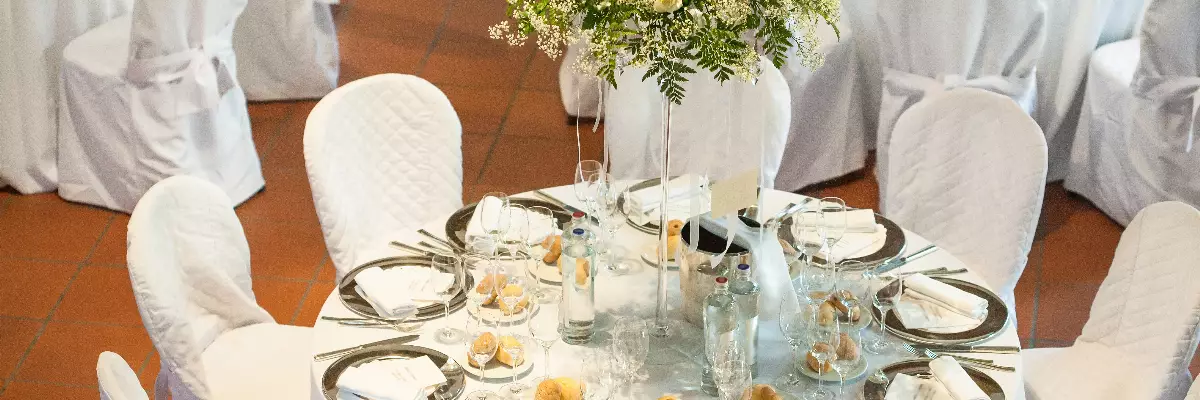
The linen rule uses one cloth per table plus 10 percent spares. For 15 tables, that gives 15 cloths and 2 extra. Napkins follow the same structure at one per guest plus 10 percent, so 100 guests would need 110. Those spare pieces matter because cloths can pick up marks during setup or service and may need replacing during the event.
Size checks matter as much as the count. A cloth for a 5ft round table will not fit a 6ft round the same way, and trestle tables need different dimensions again. Expo Hire's linen hire range lists sizes for each item, so the linen order should always sit beside the table plan.
For buffets, the source guide uses one chafing dish per 25 guests for each hot dish served. For 100 guests and three hot dishes, that gives 4 chafing dishes per dish, or 12 in total. For 50 guests and two dishes, 4 chafing dishes cover the service. That method works because buffet service needs enough hot holding space across the full line, not only enough food in the kitchen.
Expo Hire's chafing dish hire includes rectangular and round formats, so you can match the holding equipment to the service style once you know the basic count.
The source content makes clear that buffers are not arbitrary. Glasses break. Linen gets marked. Guest numbers move. Spare chairs can solve a last-minute seating problem without forcing you to rework the whole room. The guide suggests 10 percent for small, simple events where the guest count is firm, and up to 20 percent for high-value or more complex events where more can change before service.
The key is to place the buffer where the event is most likely to go short. You do not need a large reserve of everything, but you do need one where it will protect the day.
Once you have a draft order, compare it with the real layout and service plan. That final check often catches the gaps that formulas alone cannot see. If you need more examples, see planning an event for 200 guests and the event furniture layout guide.
Choose from our vast range of catering hire, furniture hire and exhibition hire products. Select from the categories listed below or use our great search function above.