Glassware works on two levels at once. You need the right style for the drink and the right volume of stock for the service. Get the style wrong and the bar looks off. Get the quantity wrong and guests wait for clean glasses while staff strip tables under pressure.
The safest approach is to choose the main glass types first, then count them against the busiest phase of the event. This guide covers the range, the quantities per person, packing, breakage and the small ordering habits that keep service moving.
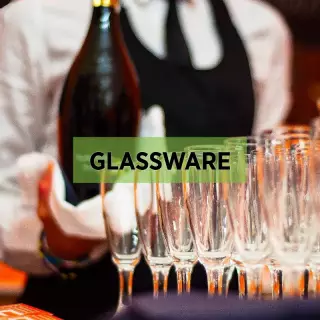
Most events start with the core set: wine glasses, champagne flutes, pint glasses and highballs. From there you add style and purpose. Bistro or tulip wine glasses suit broad event use. Crystal-style glasses lift formal dinners. Large bowl wine glasses suit fuller reds and more premium service. Champagne flutes cover arrival drinks and toasts. Pint glasses and beer tumblers cover draught and bottled beer. Highballs cover gin, spirits, mocktails and soft drinks over ice.
Rocks glasses suit short mixed drinks and whisky pours. Shot glasses cover quick-serve spirits. Water jugs and tumblers matter on dining tables and conference setups where guests expect self-pour service. If the brief includes table wine service, make sure the water glass sits in the same visual family as the wine glass. Mixed styles can make an otherwise polished table look pieced together.
Order the glass against the drink, not against habit. A premium gin serve in a cramped water glass looks mean. A casual beer festival does not need fine crystal. Build the range around the menu and the room.
For a three-hour reception, allow about 2.5 wine glasses per person. For a champagne toast, allow 1.5 flutes per person so you have cover for breakage and slow returns. For a three-hour bar service, allow two pint glasses per person. Highballs usually work at one per person when they support a mixed drinks bar rather than a full cocktail operation.
Add 15 to 20% contingency across the whole order. Breakage is part of service. So is glassware that vanishes into corners, smoking areas and side rooms. The extra stock costs less than the damage done by a dry bar because the wash-up cannot keep pace.
Some events need separate counts by phase. A wedding can need flutes for the reception, wine glasses for the meal and highballs for the evening bar. Write those counts as separate blocks so the setup team can place them in the right part of the venue from the start.
Most hire glassware arrives in stackable plastic crates, often packed in quantities of 24 to 36 depending on the shape. Those crates matter because they protect the stock in transit and make collection faster after the event. Keep them on site and keep a clear area for empties to return to the same packs.
Glasses usually go back unwashed. Expo Hire washes them on return, so your team does not need to finish the night at the sink. If you want to pre-rinse heavy wine residue or sticky mixers to keep the venue tidy, that is fine, but do not repack wet glasses loosely into the crates.
Place the crates close to the service point but out of guest sight. A row of plastic crates in the middle of a ballroom can undo the look of the bar and the dining room in one move.
Every Expo Hire order includes Free Minor Damage Waiver. That matters on glassware because some loss is normal. A typical event breaks 2 to 4% of glass stock through drops, knocks and table clear-down. Charges tend to matter only when breakage rises well above that sort of level.
You still need a handling plan. Put one person in charge of empties. Use trays rather than armfuls. Keep broken glass tubs behind the bar or service point so staff do not walk loose shards through the room. A strong handling discipline cuts both replacement cost and staff injuries.
If you expect a rougher environment, such as a standing party with a lot of movement, increase the contingency count at the order stage. The right reserve costs less than an urgent top-up or a short service.
For wine at a dinner, a 35cl or 47cl tulip wine glass gives enough bowl for both red and white without crowding the place setting. For a casual outdoor bar, a 35cl bistro wine glass or a plastic alternative can make more sense because it is easier to handle. For a champagne toast, a standard 19cl flute works well and keeps the tray count tidy.
Gin and tonic needs room for ice and garnish, so a 35cl or 47cl highball works better than a small tumbler. Beer service needs pint or half-pint glasses based on the bar list. Water service on formal tables needs a tumbler that does not dominate the wine glass beside it. Match the scale across the whole setting.
The safest route is to choose one family of wine glass, one family of tumblers and one beer glass style for the event. A shorter list is easier to count, pack and replace if you need a top-up.
For formal seated dinners, order matching crockery and cutlery at the same time as the glasses. The plate shape, the cutlery finish and the glass profile all sit in the same sightline once guests take their seats. A clean match makes the room feel planned. A mismatch can make expensive flowers work harder than they should.
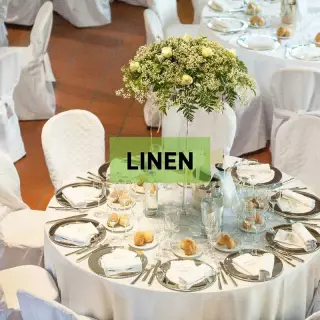
Use our crockery hire and cutlery hire ranges to keep the tabletop consistent. If the room also needs linen, add that through linen hire so the whole order moves through one schedule.
Think about table spacing at the same time. Larger glassware needs more width per guest. If the planner has pushed a round table to the top end of its capacity, smaller water tumblers and a compact wine glass can save the setting from feeling cramped.
The table below gives quick ordering numbers for common guest counts. Use it as a starting point, then adjust for menu, event length and service style.
| Glass type | 50 guests | 100 guests | 200 guests |
|---|---|---|---|
| Wine glasses | 125 | 250 | 500 |
| Champagne flutes | 75 | 150 | 300 |
| Pint glasses | 100 | 200 | 400 |
| Highballs | 60 | 120 | 240 |
Keep one note on the order for urgent changes. If the drinks list shifts from beer and wine to cocktails two days before the event, the glass mix must change as well. A short message before dispatch solves more than a rushed message from the venue floor.
No. Return them in the crates supplied and Expo Hire will wash them on return.
Contact Expo Hire with the date, venue and extra quantity. The team can check stock and route availability for a fast addition.
Yes. Many events mix wine glasses, flutes, tumblers and beer glasses in one order, provided the stock is available.
They travel in compartmented plastic crates sized to the glass type, which protects the bowls and rims during delivery and collection.
"The communication was excellent, everything was very clear"
"The service from start to finish was excellent."
Read more genuine customer reviews →