Wedding furniture hire covers every area of your day, from ceremony seating to reception dining and lounge spaces. This guide walks through what to consider at each stage.
Wedding furniture hire covers every area of your day, from ceremony seating to reception dining and lounge spaces. This guide walks through what to consider at each stage.
For current stock and pricing, see our wedding furniture hire page.
Wedding furniture shapes how the whole day feels. Guests notice the chairs as they arrive for the ceremony, the standing tables during drinks, and the dining layout during the meal. The right hire list does more than fill a venue. It sets the tone for each part of the event and helps the day move from one stage to the next without the room feeling disjointed.
The venue gives the first clues. A grand hall takes furniture in a different direction from a barn or an outdoor marquee. Ceiling height, wall colour, flooring, and fixed features all affect how chairs and tables sit in the room. If the venue already carries strong character, the hire list supports that setting. If the venue starts as a more open shell, the furniture carries more of the visual work.
That is why the style decision needs to happen early. If you want a formal dining room, the chair choice, table layout, and linen colour all need to align. If the day has a softer or more rustic feel, the same pieces change. Early clarity makes the rest of the order far easier to build.
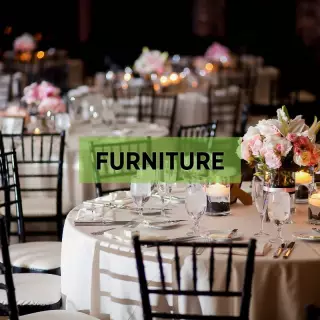
The ceremony needs furniture that looks right in photos and still works for guest comfort. Chiavari chairs remain a popular option because they suit a wide range of venues and dress well with ribbon or florals. Cross-back chairs often sit well in rustic rooms, marquee settings, and outdoor-led spaces where the wedding leans toward a softer country look.
A signing table adds one small but visible furniture point. It needs to sit where guests can see it without blocking the ceremony route. Once linen and a simple floral arrangement go on top, that table becomes part of the setting rather than a loose practical extra.
After the ceremony, guests need places to gather while the room turns around for the meal or while the couple takes photographs. High poseur tables support that part of the day well because they create easy standing points for drinks and conversation. A reception made up only of standing tables can feel stark, though, so many weddings also add some lounge seating.
Sofas and low chairs build those informal pockets. Chesterfield sofas suit traditional settings and can anchor a drinks area with a stronger furniture statement. That mix of poseur tables and lounge seating gives guests choice during the reception and helps the room feel fuller while they wait for the dining space to open.
A bar counter with stools and back-bar shelving can also become a focal point in that period. The drinks service moves more smoothly when the bar area reads cleanly from the entrance to the room.
The meal places the largest demand on the hire list. Round tables create a more intimate dining feel and suit many wedding breakfasts. Long or rectangular tables shift the room into a more communal format. Once the table shape is fixed, the chair style and height need to match cleanly so the room looks settled rather than assembled from separate decisions.
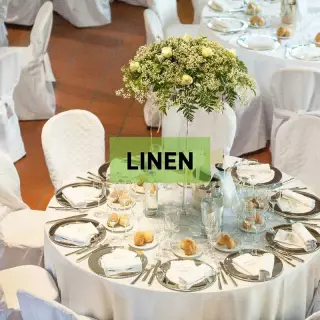
Linen ties that dining layout together. Tablecloths and napkins often carry the colour scheme through the room even when the furniture itself stays neutral. Guests may remember the flowers and lighting, but the linen base sets the tone on every table.
For a 100-person seated wedding breakfast, the minimum hire list starts with 100 chairs, 10 to 12 dining tables, 10 to 12 tablecloths, 100 napkins, 100 place settings of cutlery, 100 dinner plates, 100 side plates, 150 wine glasses, and 120 champagne flutes. That covers the room at its base level. Poseur tables for the drinks reception, top-table linen, and bar equipment sit on top of that core.
Glassware often causes the first problem when couples or planners build the list for the first time. Guests pick glasses up, set them down, and collect another. For wine service, 1.5 glasses per guest gives a safer working quantity than a strict one-per-person count. The same principle applies to teaspoons for tea and coffee. A count of 1.5 teaspoons per guest helps the final service move without gaps.
Those extra pieces do not change the visual plan, but they can change the smooth running of the day. A well-dressed room can still feel disorganised if the staff spend the evening chasing missing glassware and teaspoons.
Furniture planning can begin once the venue is confirmed, and many weddings do exactly that, especially where the date falls in peak season. Popular chair styles book early, so a live stock check helps you see what is available before the rest of the styling plan hardens. Expo Hire's live stock checking and online ordering system make that first check simple.
Summer weddings from May to September often book hire equipment 8 to 12 weeks before the date. December and January weddings tend to settle the order by October. The key point is not to leave popular lines until the final month and assume they will still be open.
Expo Hire delivers and collects across England and Wales. The live delivery tracking helps venue teams and planners see when the vehicle is due, which can make a large difference on a wedding day schedule where florist access, catering prep, and room dressing all run to the hour.
The wedding hire order works best when each stage of the day has its own furniture purpose. Ceremony seating frames the vows. Reception furniture gives guests somewhere to gather. Dining furniture carries the meal. When those layers connect, the whole event feels calm and coherent in person and in the photographs.
Also see: The best chairs to hire for every event
Choose from our vast range of catering hire, furniture hire and exhibition hire products. Select from the categories listed below or use our great search function above.