A village fete needs more hired equipment than most organising committees realise until a few weeks out. This checklist covers stall tables, seating, outdoor catering, and weather contingencies.
A village fete needs more hired equipment than most organising committees realise until a few weeks out. This checklist covers stall tables, seating, outdoor catering, and weather contingencies.
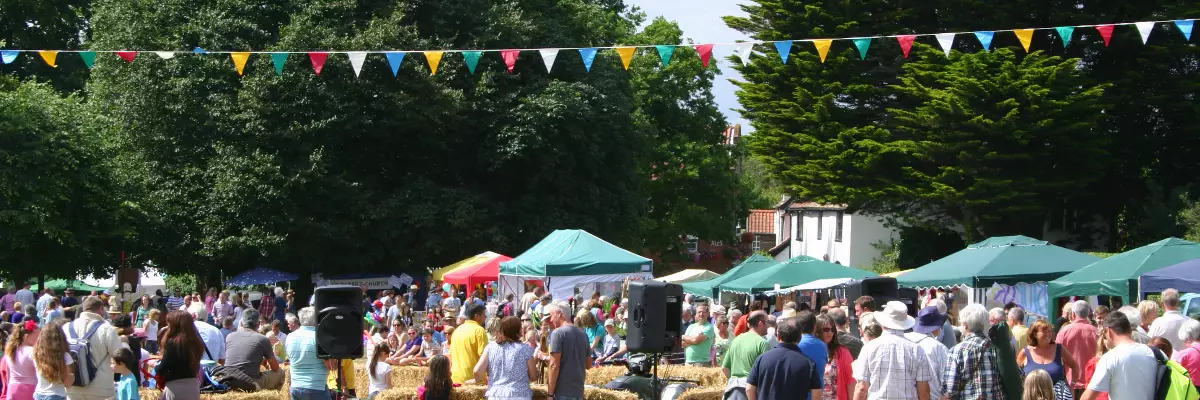
A village fete looks informal from the outside, but organising one involves managing multiple stalls, catering setups, seating areas, and weather contingencies at the same time. Getting the hire equipment right well in advance removes a lot of the stress from the day itself.
Stall tables are the core requirement for most village fetes. Each stall, from the tombola to the cake stand to the plant sale, needs at least one table. Rectangular trestle tables are the practical choice: they are lightweight, fold for storage, and set up quickly. A standard 6ft trestle is 6ft long and 2.5ft wide, giving a good display surface for most stall types.
Count your stalls and multiply by the average number of tables per stall. A typical village fete with 20 stalls might need 30 to 35 tables in total, accounting for stalls that need two tables or a service table behind the display. Banqueting and trestle tables are available in 6ft and 4ft lengths; 4ft tables suit smaller display stalls or cramped layouts.
Fetes need seating even though the event is largely outdoors and standing. Guests sit down for refreshments, and older visitors in particular need somewhere to rest. Plan one chair for every four to five visitors you expect at any one time, rather than one per head.
For an expected attendance of 300 across the day, 60 to 80 chairs in a central seating area is a reasonable provision. Folding chairs are the most practical option for outdoor events: they are weather-resistant, easy to move, and take up minimal space when the event is being set up.
The tea tent or refreshment area is usually the busiest part of a fete and benefits from a more structured setup. For a self-service tea and cake counter, two 6ft trestle tables end-to-end gives a good service line. If volunteers are serving from behind the counter, allow another table on the back wall for urns, cake stands, and supplies.
For a catering-grade tea service for 300 visitors, you need at least two large tea urns with a capacity of 20 to 30 litres each. Hot drink urns keep water at temperature continuously, which is more practical for a full-day fete than repeatedly boiling kettles. Check the catering equipment range for urn options and capacities.
A burger or sausage stall is a fixture at most fetes and one of the biggest revenue earners. Gas BBQ hire suits fete catering better than charcoal because the heat is consistent and there is no waiting for coals to reach temperature between batches. For a fete with 300 visitors eating across a five-hour event, one large gas BBQ handles the volume if there are two people cooking. Two smaller BBQs give more flexibility.
Add a 6ft trestle table behind the BBQ as a prep surface and a small table in front for sauces and napkins. Linen on these tables is optional but looks tidier in photographs.
Gazebos serve two purposes at fetes: they protect stall holders and their stock from sun and light rain, and they give the event a more defined visual structure. The gazebo range includes 3m x 3m units that cover a standard stall setup.
For a fete with 20 stalls, covering the most weather-sensitive stalls (cake and produce stalls, craft items, tombola) is the priority. Ten to twelve gazebos positioned over the most vulnerable stalls provides good coverage without the cost of covering every stall. The refreshment area and food stalls benefit most from overhead cover.
English summer weather makes a weather plan essential, not optional. The main risk is not heavy rain but the prolonged light drizzle that puts visitors off coming at all. Gazebo cover over the refreshment and food areas is the most effective response to this, as it keeps the most socially important parts of the fete functioning even in poor conditions.
If the fete site is exposed, also consider where pedestrian routes between stalls will become muddy in wet weather. Temporary matting or ground cover for high-traffic areas is available from event hire companies and can prevent a wet afternoon from becoming a mud problem.
Village fetes are typically run on tight budgets by volunteer committees. The hire cost of stall tables and chairs is one of the most negotiable elements of event hire for community events. Expo Hire offers a 25% deposit scheme for larger orders, which helps committees manage cash flow when organising events months in advance.
Prioritise gazebos and catering equipment in the hire budget, as these have the biggest impact on the day's success. Chairs and tables represent a smaller cost and are worth hiring rather than borrowing from local halls, where availability is unreliable.
Summer fetes typically take place in June and July. Submit your hire enquiry by April to secure equipment and delivery slots. Expo Hire delivers across England and Wales; use the delivery calculator to check delivery costs to your site postcode.
See also: community event hire guide and sports day hire guide.
Choose from our vast range of catering hire, furniture hire and exhibition hire products. Select from the categories listed below or use our great search function above.