A temporary catering kitchen covers two main scenarios: a venue kitchen closed for a refit and a festival or outdoor event where no fixed kitchen exists. Both need the same core equipment but different power infrastructure. This guide covers what to order, how much power you need and what food safety rules apply.
A temporary catering kitchen covers two main scenarios: a venue kitchen closed for a refit and a festival or outdoor event where no fixed kitchen exists. Both need the same core equipment but different power infrastructure. This guide covers what to order, how much power you need and what food safety rules apply.
A temporary catering kitchen needs more than a few ovens dropped into a spare room. You need a working line for cooking, holding, prep and cold storage, plus the power plan to support it. If the venue kitchen is out of use, or if your event takes place in a marquee or service compound, the temporary setup becomes the kitchen for the duration of the job. That means your equipment list has to support food prep, service flow and hygiene from the start.
Expo Hire supplies the core equipment that forms those kitchens, from ovens and hot cupboards to fridges and stainless steel prep tables. The right mix depends on guest numbers, menu scope, service window and the power available on site. Those four points should guide the order before anything else.
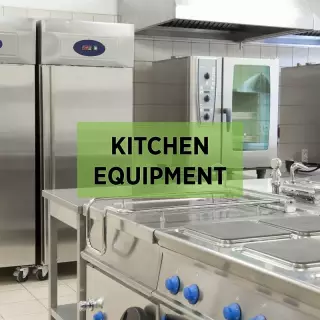
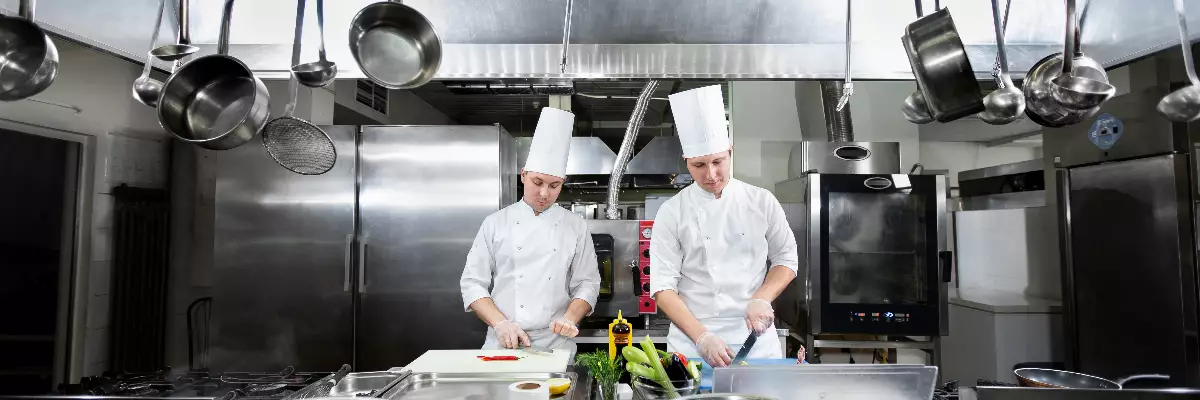
Every kitchen needs clear zones. Cooking sits at the centre, backed by hot holding, refrigeration and prep space. Expo Hire stocks single electric ovens that suit lower-volume work, double electric ovens for larger service and 4-shelf hot cupboards for cooked food. We also stock under-counter and upright refrigeration plus 6ft stainless steel prep tables that give you a clean work surface for the team.
The point is not to think about one item in isolation. If you add oven capacity, you also need enough prep surface, enough holding space and enough cold storage to feed that oven through service. A temporary kitchen works when the equipment supports the full chain from raw ingredients to plated food.
Power remains the main planning issue in temporary kitchens. Small items such as urns and single countertop ovens run from a standard 13A supply. Standalone commercial ovens need 32A single-phase. A larger setup with several ovens, hot cupboards and fridges running at the same time may need 3-phase power at 63A or above.
You should confirm that supply with the venue or electrical contractor before you place the order. If the site cannot support the electrical load for the cooking line you want, the kitchen plan has to change. Gas ovens can reduce the electrical burden in marquee sites or outdoor compounds where generator power is limited, but gas units need a qualified gas engineer for the on-site connection. That requirement belongs in the schedule from the start.
Food safety depends on holding temperatures as much as cooking. Hot cupboards keep cooked food above 63°C during service, which matters when the kitchen needs to plate in waves or hold dishes for a short period before dispatch. Refrigeration needs to keep raw ingredients below 5°C, which becomes more important in summer kitchens and high-volume jobs.
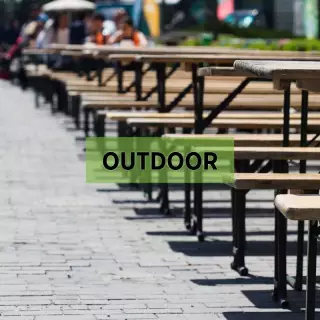
Outdoor sites raise that pressure because ambient heat can work against the cold chain. In those conditions, commercial refrigeration matters. A temporary kitchen may sit in a tent, a service yard or a back-of-house room without the climate control of a built kitchen, so the fridge capacity and the access route between fridge, prep and cookline need proper thought.
Prep tables look simple, yet they shape how the kitchen feels to the team. Expo Hire stocks 6ft stainless steel prep tables that give you 1.8m of clean prep surface per unit. The source guide allows one 6ft table for each pair of kitchen workers at peak, and it notes that four 6ft tables can support a team of six in a compact marquee kitchen at a moderate pace.
That matters because the kitchen needs room for prep, portioning, plating and washing-up. If those tasks collide on one or two surfaces, the service slows and the team starts to cross paths at the busiest point of the shift. A better layout gives each task a clear place and keeps the route between fridge, prep table, oven and hot cupboard open.
A temporary kitchen can support very different jobs. One venue may need a kitchen while the permanent space sits closed for a refit. Another may need a fresh catering marquee for a festival or outdoor function. The settings differ, but the planning method stays the same. You need the guest count, the service window, the menu scope and the site power details before you can build the right order.
A kitchen for 200 guests across three days does not need the same setup as a kitchen for 50 guests at one lunchtime service. The equipment range can cover both, but the mix changes with the workload. That is why the planning conversation starts with the event format rather than the product list.
Single items may be available at short notice, but full kitchen packages need more planning. Setups with multiple ovens and 3-phase power requirements need a minimum two-week lead time in the source guidance. That window gives you time to confirm power, delivery access and the shape of the working area before the equipment leaves the depot.
If your request sits close to the event date, phone the depot and check what stock is free for the period. That matters most on peak summer dates when many caterers and venues draw from the same broad equipment pool.
A strong temporary kitchen supports the menu, the team and the service pattern without wasting space or power. Ovens, hot cupboards, refrigeration and prep tables all need to work as one chain. If you get that chain right, the kitchen feels organised and the event team can focus on food and timing rather than workarounds.
See our temporary kitchen hire page for full packages, or browse the catering equipment range for ovens, hot cupboards and refrigeration.
Choose from our vast range of catering hire, furniture hire and exhibition hire products. Select from the categories listed below or use our great search function above.