<p>This guide covers the technical requirements for hiring a pie warmer for events, markets, and festivals. It details the operational differences between heated cabinets and heat lamps, food safety regulations for holding temperatures, and how to select the correct catering equipment for your specific service needs.</p>
<p>This guide covers the technical requirements for hiring a pie warmer for events, markets, and festivals. It details the operational differences between heated cabinets and heat lamps, food safety regulations for holding temperatures, and how to select the correct catering equipment for your specific service needs.</p>
This guide covers the technical requirements for pie warmer hire at events, markets, and festivals. It details the operational differences between heated cabinets and heat lamps, food safety regulations for holding temperatures, and selecting the correct catering equipment hire for your specific service needs. Expo Hire operates entirely online, allowing you to check live stock and pricing without making a phone call.
Manufacturers build pie warmers to maintain the core temperature of pre-cooked pastries and savoury snacks. They operate as holding units rather than cooking appliances. Two primary types of holding units exist for commercial catering. Every order includes a free minor damage waiver, covering accidental scratches or dents during your busy service.
These units feature internal elements that heat the air within an enclosed space. Most models include a water tray to create humidity, preventing pastry from drying out or becoming brittle during a long service. High-volume environments like festivals rely on these enclosed models to handle constant door opening and closing.
Infrared elements in heat lamps radiate warmth directly onto the product. These open-fronted or glass-fronted units suit immediate service but provide less stable temperature control than enclosed cabinets over extended periods. Cafes and indoor exhibition stands frequently use them for visual merchandising.
Calculate your peak demand before selecting a unit. Manufacturers categorise these appliances by their shelf capacity, typically ranging from 12 to 30 standard-sized pies. High-value orders over £500 qualify for a 25% advance deposit option, while standard orders require no security deposit at all.
Always account for the recovery time of the unit. Loading a cold appliance with ambient-temperature pies increases the time needed to reach the safe holding zone. Pre-heating the unit for at least 30 minutes before the first load remains essential.
UK food safety regulations dictate that hot food must stay at a temperature of 63°C or above. A pie warmer must maintain this temperature throughout the cabinet. Failing to meet these standards risks bacterial growth and potential closure by environmental health officers. Local authorities frequently inspect temporary catering setups at festivals and public events.
Operators should follow these procedures:
A pie warmer operates as a specialist tool. Depending on your menu, other catering equipment might suit your event better. Matching the appliance to the food type prevents quality degradation.
Serving plated meals rather than individual pastries requires a hot cupboard. These units provide a larger internal volume to keep plates and bulk food items at stable temperatures. Caterers use them extensively in banquet halls and large corporate events.
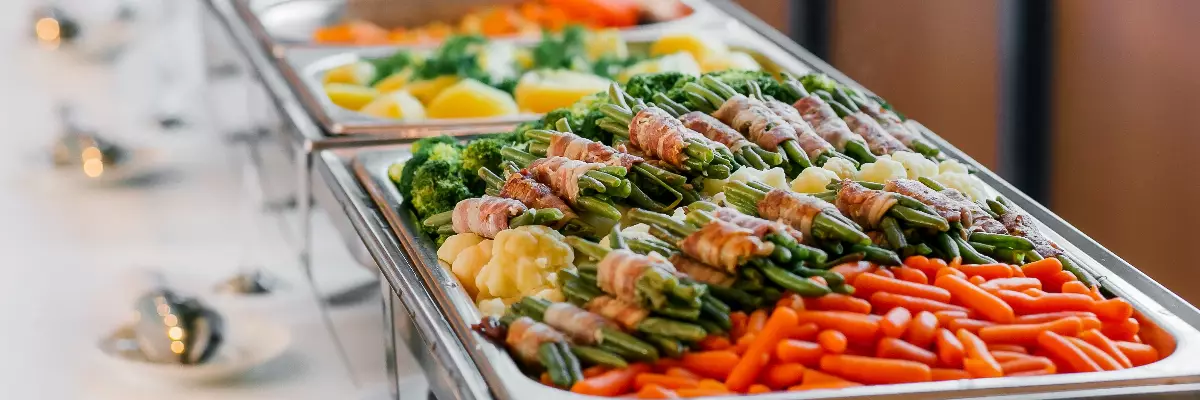
Buffet-style service or self-service events rely on chafing dishes as the industry standard. They use fuel or electricity to keep food in gastronorm pans warm, allowing for straightforward replenishment and presentation. You can return all gastronorm pans and serving utensils unwashed using our 'Send It Back Dirty' service.
Serving hot food onto plates means the crockery must also hold heat to prevent rapid cooling. Using heated plate dispensers alongside your food holding equipment maintains the quality of the meal from the kitchen to the customer.
Booking pie warmer hire for temporary sites requires careful attention to the power supply. Most commercial pie warmers draw power from a standard 13-amp UK plug socket. Check that your power distribution at the event site can handle the load, especially alongside multiple units, lighting, and other kitchen appliances. We calculate delivery from £40 ex-VAT based on the road distance from our nearest depot to your venue. You can also collect your equipment directly from our Birmingham warehouse between 7am and 3pm, Monday to Friday.
Space often presents a challenge in market stalls. Measure your available counter space before booking. Creating seating areas for customers requires our range of furniture hire, including 6ft round banqueting tables and white folding chairs, to build a functional dining space. You can browse our full selection of chair hire and table hire options to complete your setup.
Can a pie warmer cook raw pastry?
No. These appliances function strictly for holding pre-cooked food. Attempting to cook raw pastry in a holding unit results in unsafe food temperatures and a failure to meet hygiene standards.
Time required to reach operating temperature
Most units require between 20 and 40 minutes to reach a stable internal temperature of 63°C or higher. Always switch the unit on well before service begins.
Adding water to the tray
Units with a humidity tray require a small amount of water to prevent the pastry from drying out. Check the water level periodically throughout the day, as evaporation will occur.
Managing power failures
Power failures cause the temperature to drop. You must monitor the temperature closely during an outage. Discard the food to prevent the risk of bacterial growth if it drops below 63°C for more than two hours.
Stock levels update in real time. Select your hire dates to check availability and confirm your order online.
Choose from our vast range of catering hire, furniture hire and exhibition hire products. Select from the categories listed below or use our great search function above.