Parasol size determines how many guests get cover and what furniture arrangement works underneath. A 2m parasol suits a bistro table for two; a 3m parasol covers a dining table for six. Cantilever and pole designs serve different needs. This guide covers the key choices, base weights and how many parasols to order per guest count.
Parasol size determines how many guests get cover and what furniture arrangement works underneath. A 2m parasol suits a bistro table for two; a 3m parasol covers a dining table for six. Cantilever and pole designs serve different needs. This guide covers the key choices, base weights and how many parasols to order per guest count.
Parasols shape outdoor space in a practical way. They give guests shade, help seating areas feel defined, and make open layouts look more finished. The right size depends on the table beneath it, the surface it stands on, and the way guests will use the space. A parasol that works for a bistro table will not do the same job over a six-seat dining layout, while a large canopy can look heavy over a small seating cluster. If you start with the furniture plan, the choice becomes easier.
The main question is how much space you need the canopy to cover. That includes the tabletop, the chairs around it, and the space guests use to sit down and stand up. It also includes the base, which takes up room in the layout and becomes more important as the canopy gets larger. Size affects the look of the event, but it also affects guest comfort, circulation, and the amount of weight or anchoring needed to keep the parasol secure.
The source guide says a 2m parasol covers a 60cm bistro table with two chairs and gives shade for two to three people seated close to the table. That makes it a good fit for cafe-style layouts, small refreshment points, and short-stay seating where you want cover over a modest footprint. It can also work over a small drinks or welcome table where the focus sits on the surface rather than on a full dining group.
Base weight matters from the start. On a hard surface, the same guide calls for at least 15kg. On grass, a lighter base can work if the pegs can reach proper depth. The source content also warns that dry summer ground can harden enough to reduce peg depth, so the condition of the site still needs checking on the day.
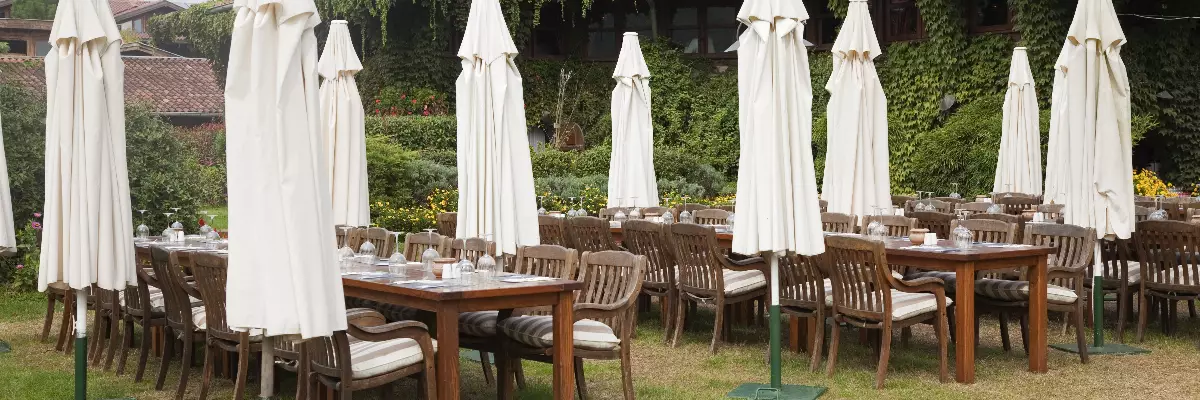
A 3m parasol covers a larger seating area and suits guests who will stay at the table for a meal rather than stop briefly for a drink. The source guide describes it as the right size for a six-person dining table, with about 70 to 75cm of clearance around the table edge. That extra coverage helps more guests stay within the shade throughout service, which makes a difference at garden parties, wedding receptions, and outdoor corporate dining.
The larger canopy also needs more support. The guide gives 20 to 25kg as the minimum base weight on a hard surface, rising to 30kg on exposed sites without a windbreak or where ground stake anchorage is needed alongside the base. That added weight affects where the parasol can go and how easily the layout can change once setup begins.
Cantilever parasols move the mast to one side and project the canopy from a lateral arm. That leaves the centre of the seating area clear, with no pole running through the middle of the table and no mast blocking sightlines between guests. The source content points to dining areas, rattan lounge sets, and other layouts where a central pole would feel awkward or intrusive.
The trade-off is the base. Cantilever parasols need heavier support, with the guide giving 30 to 40kg depending on canopy size. The base also needs its own space beside the seating area, so you need to allow for it in the wider furniture plan rather than thinking only about the shade footprint.
Pole parasols keep the format simple. The mast passes through the centre-hole of a suitable table or stands in a separate base nearby. The source guide highlights round tables with a centre pole hole as a clean fit for this style. That makes pole parasols useful when you want a traditional dining setup without extra structure around the edge of the table.
If the layout uses rectangular tables or low lounge seating, that centre pole can become less convenient, which is why the guide points you towards cantilever models in those cases. The choice is not only about looks. It is about how guests will use the space once the chairs, plates, and drinks are on the table.
The source content states that Expo Hire parasols carry UPF 50+ protection, blocking more than 98 percent of UV radiation. It also notes that canopy condition matters because worn or faded fabric loses performance over time. Expo Hire replaces canopies before they drop below that standard, which means the state of the fabric forms part of the value of the hire, not only the listed size.
The guide gives one 3m parasol per six to eight guests for outdoor dining. For a standing drinks reception, it suggests one parasol per ten to twelve guests because not everyone needs shade at the same moment. That difference shows why guest numbers alone do not decide the order. The event format matters just as much. A seated lunch needs regular coverage across fixed tables. A reception can work with smaller shaded zones that guests move in and out of during the event.
The same source also notes that open coastal sites may need cantilever parasols with heavy bases or ground anchors, while corporate rooftop events can benefit from the cleaner table footprint that a side-mounted mast creates. Those examples show how site conditions and layout work together.
You can browse the full parasol hire range for sizes and styles, or see the wider outdoor furniture hire range if you are building a complete outdoor setup. When the canopy size, base type, and furniture layout all line up, the shaded areas feel comfortable and the whole event looks more considered.
Choose from our vast range of catering hire, furniture hire and exhibition hire products. Select from the categories listed below or use our great search function above.