Plan your wedding buffet with Expo Hire by considering table sizes, linen options, and essential equipment for a seamless setup.
Plan your wedding buffet with Expo Hire by considering table sizes, linen options, and essential equipment for a seamless setup.
For current stock and pricing, see our wedding furniture hire page.
A buffet service creates a relaxed atmosphere where guests mingle and select their own food. You can make your wedding special with furniture hire by planning a logical layout that prevents bottlenecks. Careful arrangement of serving stations keeps the room moving and stops long queues from forming during the meal. Professional event organisers understand that the physical layout dictates the success of the dining service.
The simplest buffet setup places a single-sided run against a wall. Guests queue from one end and proceed past the food stations in a straight line. This configuration suits smaller venues with limited floor space. An island layout works better for larger guest numbers. This arrangement lets guests access the food from both sides, doubling the serving capacity. Two queues move through the food simultaneously, reducing waiting times for hungry attendees. An island buffet requires a minimum of 2 metres of clear space around all sides to permit comfortable movement for both guests and catering staff.
Trestle tables provide the best base for buffet setups. A standard 6ft (1.8m) trestle table supplies ample surface area for approximately 8 to 10 chafing dishes and serving platters. Placing two 6ft trestle tables end-to-end creates a continuous serving line without gaps or height discrepancies for larger events. This creates a cohesive presentation for the catering team. For celebrations in historic venues, our stately home hire service supplies equipment that matches the grandeur of the setting. Booking your table hire online guarantees live stock availability for your dates.
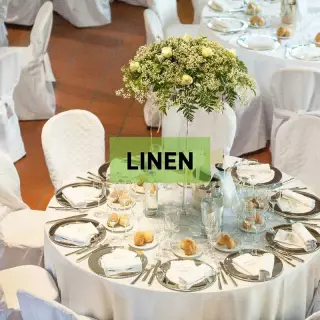
Floor-length tablecloths create an elegant look for a wedding reception. These cloths drop to within 2.5cm of the floor. This length conceals table legs and any stored equipment underneath, such as spare fuel for chafing dishes or stacks of reserve plates. This creates a clean visual line across the room. Lap-length cloths expose the table legs and underside, making them less suitable for a formal wedding buffet. You can browse our linen hire section to find the exact dimensions required for your chosen tables.
Arranging the food logically keeps the buffet moving at a steady pace. Hot dishes belong at the beginning or centre of the serving line, where guests naturally start their selection. Cold dishes, salads, and bread sit best towards the far end of the run. Placing desserts on a separate table keeps the sweet course distinct from the main meal. This lets you control the reveal, perhaps uncovering the dessert station after the main buffet service concludes.
Plates belong at the very start of the food run. Serving utensils must accompany each dish to prevent cross-contamination. Napkins sit best at the end of the buffet line. Guests pick them up last, after collecting their food, preventing them from juggling napkins throughout the serving process. Placing napkins at the start leads to guests tucking them under an arm, getting in the way of serving and potentially dropping onto the floor.
Queues form naturally during buffet service, but you can manage their flow through smart placement. Placing a separate table for crockery near the entrance to the buffet area helps to alleviate congestion. Guests collect a plate and then move to the start of the food line. This stops a bottleneck forming at the buffet entrance while attendees select a plate and begin serving themselves.
A clearly defined entry and exit point for the buffet run prevents guests from doubling back and disrupting the flow. You can mark the entry end clearly or position staffed dishes at the far end. This guides guests to move in a single direction, keeping the line moving steadily from start to finish.
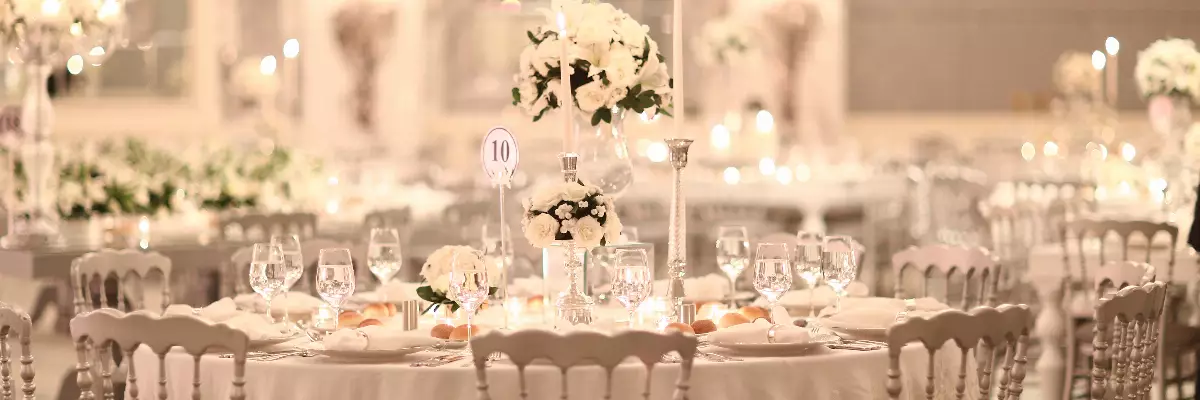
Chairs remain at the dining tables unless the event functions as a standing reception. For a buffet where guests sit and eat, chairs at the tables remain essential. Leave sufficient space between tables to allow guests to access their seats and navigate the room with full plates. Round dining tables require careful consideration of their diameter in relation to the number of seated guests. A 1.8m (6ft) round table seats 8-10 guests comfortably. Our EventPro® range supplies commercial-grade furniture to the hire trade. Reserving your chair hire online requires no security deposit.
Beyond tables and tablecloths, several other equipment items remain crucial for a wedding buffet setup:
Expo Hire stocks tables, table linen, and catering equipment for large-scale events. You can make your wedding special with furniture hire by selecting the exact quantities required for your venue. Planning a Hindu wedding or a Sikh wedding requires precise coordination of equipment and layout. Every order includes a free minor damage waiver, covering accidental scratches or breakages. Our system calculates delivery from £40 ex-VAT based on road distance from your nearest depot. Prices and live stock show directly on the site. Add your required items to the basket and confirm your dates online.
Choose from our vast range of catering hire, furniture hire and exhibition hire products. Select from the categories listed below or use our great search function above.