Choosing the right table layout for a wedding reception affects how guests interact, how the room flows, and how much it costs to hire. This guide covers every common layout with pros, cons and space calculations.
Choosing the right table layout for a wedding reception affects how guests interact, how the room flows, and how much it costs to hire. This guide covers every common layout with pros, cons and space calculations.
The floor plan you choose shapes the entire event. It affects room capacity, conversation flow, and your overall budget. Securing your wedding reception table layout hire takes a bit of planning, but you only have a handful of real decisions to make. Professional event organisers start with the room dimensions and work backwards. You must balance the aesthetic appeal of the room with the practical needs of catering staff and guests.
This initial decision depends more on your venue than your personal preference.
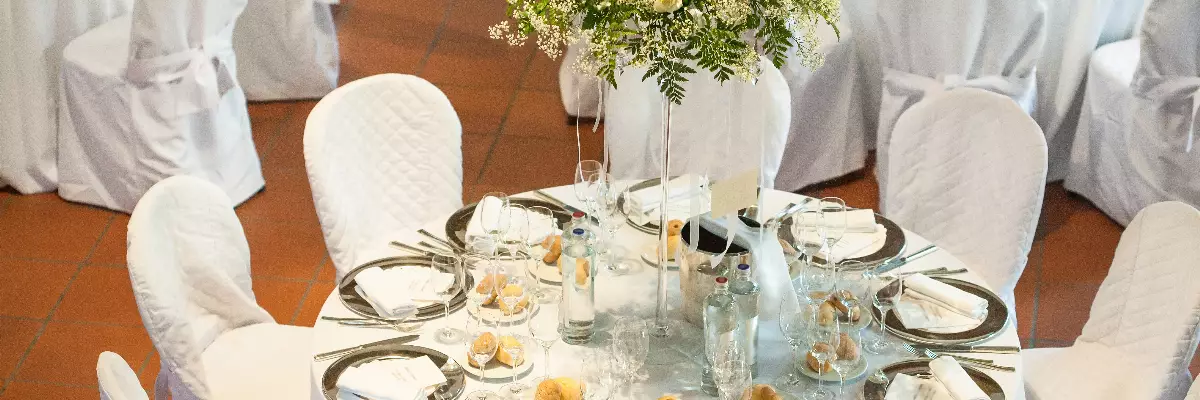
Round tables remain the standard format for most events. Everyone at the table faces each other, prompting better conversation. A 5ft (150cm) round seats 8 guests. A 6ft (180cm) round seats 10. They work well in square and rectangular ballrooms. You can arrange them in a grid with clear aisles. Planners favour round tables because they break up the rigid lines of a square room.
Rectangular banquet tables suit long, narrow rooms. Barn venues, converted mill spaces, and outdoor marquees with a rectangular footprint all lend themselves to long table layouts. You can fill a room with these tables, and they tend to cost slightly less per guest because you need fewer individual units. The downside involves communication. Guests can only talk to the people next to them and directly opposite. You also need to consider the visual impact of long straight lines in a large space.
One or a few very long tables, often trestle tables sitting end to end, run the length of the room. This style remains fashionable for barn and outdoor weddings. It creates a communal, intimate atmosphere and photographs well. The practical limitations include conversation barriers. Guests at opposite ends of a long table have no interaction. This setup requires a room shape that supports long lines. Service takes more time, as staff must walk the full length to reach everyone. You must also factor in the space required at the ends of the tables for staff to turn.
The classic wedding format features round tables across the room. You leave a clear aisle down the centre and space around the perimeter. This works best for 80 to 200 guests in a rectangular room. You can assign seating without hassle. Staff navigate the floor plan without obstruction. We supply table hire in 5ft and 6ft sizes. This layout provides the most flexibility for last-minute guest changes.
Cabaret style uses round tables with chairs on three sides only. All seats face the same direction towards a stage, dance floor, or screen. Planners use this setup when entertainment or speeches form a central part of the evening. Guests see the front of the room without turning their chairs. The trade-off means you fit fewer guests per table. You need more floor space overall, since one side of each table remains empty. This layout suits corporate-style weddings or events with extensive visual presentations.
The traditional wedding format features a straight rectangular top table for the wedding party facing the room. Round tables for guests fill the remaining floor space. It feels formal and familiar. Some couples replace it with a sweetheart table for just the two of them. Others choose a round top table for a less formal feel. A sweetheart table means the rest of the wedding party sits with their own families at guest tables. This requires extra place settings at those tables.
As a working rule, allocate the following floor space per person before adding anything else:
| Layout | Floor space per guest | 80 guests | 120 guests | 200 guests |
|---|---|---|---|---|
| Round tables | 1.5 sqm | 120 sqm | 180 sqm | 300 sqm |
| Cabaret (3 sides) | 1.8 sqm | 144 sqm | 216 sqm | 360 sqm |
| Banquet / long tables | 1.2 sqm | 96 sqm | 144 sqm | 240 sqm |
These figures cover tables and chairs only. Add a further 20% for the dance floor, top table, buffet or catering stations, bar area, and any band or DJ setup. A 120-guest wedding with round tables and a dance floor needs 216 sqm of usable floor space. You must also account for structural pillars, fire exits, and uneven floor sections in older venues.
A common rule dictates 1 sqm of dance floor per 3 guests. For 100 guests, that equals 33 sqm (a 6 x 6m square). For 150 guests, allocate 50 sqm (a 7 x 7m square). Do not oversize the floor. A half-empty dance floor looks far worse than a packed one. It also eats into seating space you may need.
Position the dance floor in the centre or towards the end of the room opposite the entrance. Avoid putting it in a corner. Guests struggle to reach corner floors without walking around tables. A central dance floor acts as a focal point and draws guests into the main space.
Straight top table: The traditional format puts the wedding party in a line facing the room. It feels formal and visible. Conversations across a long straight table feel awkward, and the people at the ends often feel isolated. You need a long, uninterrupted wall to position this table.
Sweetheart table: A small table seats the couple only. It feels intimate, works well for photographs, and removes the politics of seating arrangements at the top. The bridal party joins their families at guest tables. This dynamic works well or creates tension depending on the families involved. It frees up significant floor space at the front of the room.
Round top table: This option seats the wedding party on a standard 6ft round. It feels relaxed, prompts better conversation, and requires no additional hire items beyond standard round tables. It works well for smaller weddings of 60 to 80 guests. You position this table in the centre of the room or slightly offset from the dance floor.
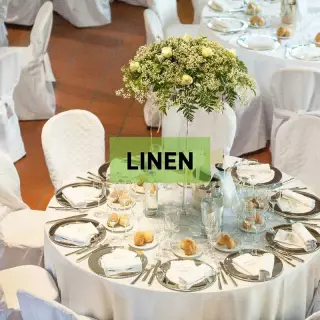
Getting the tablecloth size right matters. A cloth that falls short exposes the table legs. A long cloth pools on the floor.
For long banquet tables pushed end to end, measure the full run. Use overlapping cloths or a custom runner. Browse our linen hire range for all standard sizes.
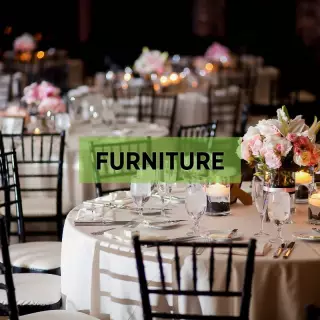
Once you know your guest count and venue dimensions, the layout becomes clear. Browse our furniture hire section to build your order. If you hire plates and glasses, our Send It Back Dirty service means you return crockery, glassware, and cutlery unwashed. We handle the cleaning. All prices and live stock levels show directly on the site. You pay no security deposit, and every order includes a free minor damage waiver. Our system calculates delivery from £40 ex-VAT based on road distance from our nearest depot. Add items to your basket and confirm your dates online.
For more planning help: Wedding Chair Hire Guide, Table Hire Guide.
Choose from our vast range of catering hire, furniture hire and exhibition hire products. Select from the categories listed below or use our great search function above.