Napkins seem straightforward until you are choosing between cocktail and dinner sizes, deciding on a fold, and trying to work out how many to order. This guide covers all three questions.
Napkins seem straightforward until you are choosing between cocktail and dinner sizes, deciding on a fold, and trying to work out how many to order. This guide covers all three questions.
Napkins are small, but they carry more visual weight on a table than most planners expect. Guests notice them because they sit in the middle of each place setting or next to the cutlery on every cover. If the size is wrong, the fold is messy or the colour fights the linen, the whole table can feel rushed even when the chairs, flowers and glassware are right. A few straightforward decisions on size, fold and quantity will usually solve the problem before it starts.
The two standard sizes for hired napkins are cocktail napkins and dinner napkins, and they belong to different parts of the event. Cocktail napkins are the smaller option, often around 30cm x 30cm when unfolded. They suit drinks receptions, canapé service and standing events where guests need something to catch condensation or hold under a small plate. Because guests use them quickly and throw them away, the fold matters less than having enough in the right places.
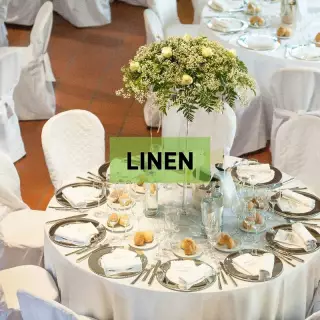
Dinner napkins are larger, often around 45cm x 45cm or 50cm x 50cm when unfolded, and they form part of the table setting rather than a simple service extra. They need a cleaner finish because guests see them as soon as they sit down. A wrinkled or uneven dinner napkin stands out on a formal table, which is why consistency matters as much as colour or cloth size.
If the event includes both a reception and a seated meal, order the two types separately. A dinner napkin feels oversized on a drinks tray and does not solve the same problem as a small cocktail napkin near a glass or canapé. In the other direction, a cocktail napkin looks mean on a dressed dining table and does not give guests the same practical coverage during a meal. That is why combining the order into one format rarely saves much and often leaves one part of the event feeling underprepared.
The most useful napkin folds are the ones a venue or planner can reproduce across a full room without slowing the setup to a crawl. A simple rectangle fold placed to the left of the forks works almost anywhere. A cone or bishop's hat fold adds height and shape without asking for specialist skills. Both look good from a distance, and both still look tidy when guests arrive a little early and staff are making final adjustments.
Decorative folds such as fans, swans or other sculpted shapes can look impressive on a single dressed table, but they bring a time cost that grows fast across a whole event. A table of ten set with elaborate folds can take half an hour or more to finish properly. Across a large wedding or gala dinner, that becomes hours of labour that someone has to allow for in the setup plan. Unless the fold is a specific design feature, most events benefit more from a simple fold done well than a complex fold done in a rush.
For a sit-down meal, order one dinner napkin per guest plus 10% for replacements. That covers drops, stains, late additions and the fact that a planner may want a few spare settings kept back. For 100 guests, that means 110 dinner napkins. For 200 guests, 220 is the safer number.
For a drinks reception, the pattern changes because guests use more than one napkin over the course of the event. The existing guide's rule of 2.5 cocktail napkins per guest remains a useful working figure. For 100 guests, order around 250 cocktail napkins. If canapés include sauces, pastries or anything likely to leave fingers messy, lean toward the higher side rather than the lower one.
Napkins can either blend into the table or do some of the design work. White napkins on white cloths look formal and clean, but that approach can feel flat if there is little colour elsewhere. Coloured napkins on white or ivory cloths give the table more shape without changing the whole scheme. Storm grey and ivory cloths often accept a wider range of napkin colours than stark white does, which is useful if you want contrast without moving too far away from a classic setting.
If you are unsure, test one full place setting before you commit. The cloth, chair, plate and lighting can all change how the napkin colour reads in the room. What looks rich in a sample book may feel too dark in a marquee or too cool in a ballroom. A trial setting answers that faster than guessing.
Napkin planning is not only about what you hire. It is also about who is putting everything on the tables. Some venues dress the room themselves. Some planners or caterers take that job on. Some events rely on family members or temporary staff during a tight turnaround. If the person folding the napkins has limited time, choose a fold that they can repeat without creating a bottleneck in the schedule. That is one reason simple folds remain popular on well-run events. They look finished without stealing time from the rest of the room setup.
Napkins look best when they stay protected until the room is ready. Keep them covered, dry and away from high-traffic service areas until staff start laying tables. Put a small reserve aside rather than sending every piece out at once. That reserve helps when a glass spills during setup, a table gets added at the last minute or a venue manager spots one setting that needs replacing. The cloth is a small item, but once the room is dressed, the spare stack can save a lot of unnecessary stress.
Browse our napkin hire and tablecloth hire ranges for available colours and sizes. We can supply matching sets if you want the napkins and cloths from the same range, or help you build contrast if the napkin is there to lift the table design.
Choose from our vast range of catering hire, furniture hire and exhibition hire products. Select from the categories listed below or use our great search function above.