Street food setups at events need more than a griddle and a gazebo. This guide covers cooking equipment, holding and prep, power supply options, and how to plan for multiple traders on the same site.
Street food setups at events need more than a griddle and a gazebo. This guide covers cooking equipment, holding and prep, power supply options, and how to plan for multiple traders on the same site.
Street food setups range from a single trader working from one table to a full food court with several traders, separate service lines, and dedicated power drops. The equipment list changes with the menu and the site, but the planning starts with three simple questions. What are you cooking, how long does the service run, and what power do you have on site?
If you answer those questions first, the rest of the order becomes much easier to shape. Cooking kit, holding equipment, prep space, and shelter all follow from them. If you skip them, the event can still look complete on paper while the service struggles on the day.
The food itself drives the core equipment list. Traders cooking noodle dishes and high-heat pan food may need commercial gas burners or wok burners. Burger and quesadilla traders often work from flat-top griddles because the surface gives them room to cook in batches and hold a steady service pace. Fish and chip traders or anyone serving deep-fried food may need fryers.
Many street food traders bring their own specialist cooking kit, but hired equipment fills the gap when a trader lacks transport space, when the organiser needs backup units, or when the event builds a temporary site from scratch. You can browse the street food equipment hire range for commercial griddles, fryers, and gas burner units that support temporary food service.
The key point is that the menu and the service method sit together. A trader who cooks every order to demand needs a different setup from a trader who prepares the food in batches and serves from a hot hold. The site may host both at once, so one event can need several service styles in the same field or yard.
Cooking draws the eye, but prep and holding gear keep the queue moving. If the trader has no flat work surface, no chilled storage, and nowhere to hold part-finished food, the service slows even if the cooking equipment has enough capacity.
Bain maries hold sauces, soups, and pre-cooked elements at serving temperature. Heated display cabinets suit products such as wraps, pies, or sliders where the trader prepares the food ahead of the rush and then serves it from the front counter. That works well for events where guests want speed from the queue rather than food assembled one order at a time.
Prep tables matter for assembly work. If the trader needs space for buns, garnishes, sauces, disposable packaging, or serving trays, a folding stainless steel prep table gives them a clean working surface at a practical height. Chilled ingredients also need proper storage. Fridges or cool boxes help traders keep ingredients close to hand without crowding the cooking line.
Power supply is one of the most common failure points in temporary street food setups. A venue may look suitable until the organiser starts counting sockets, cable routes, and load across several traders at once. Many pieces of commercial kitchen equipment run on 13A sockets, but fryers, commercial induction hobs, and large griddles may need 16A or 32A supplies.
That means you need the power draw of every item before the event, not after the van doors open. Once you know that, you can match the site supply to the equipment list. If the venue mains cannot carry the load, the trader pitch plan may still work, but the service plan will not.
For outdoor sites with no mains connection, a generator takes over that job. The source guide on this page gives two clear reference points: a 6kVA generator will support one commercial fryer and two burners, while a food court with four or five traders will often need a 20kVA generator or larger. Fuel planning and noise also matter, especially on long services or at sites near homes and public parks.
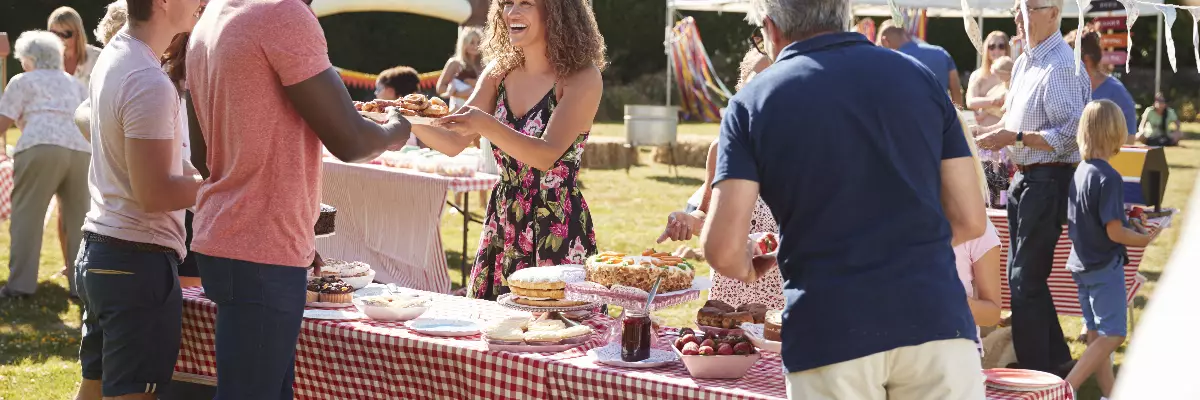
One trader can adapt on the day. Five traders need structure before they arrive. Each trader needs a defined pitch footprint, power if the setup runs on electric equipment, access to water, and a waste disposal point. If those details stay vague, the first hour of the event gets swallowed by reactive problem-solving.
Gazebos or canopies also matter for outdoor sites because traders need a clear service point and a sheltered prep area. That becomes more important where the event runs for several hours and the weather can shift through the day.
The layout of the food court changes the way guests move and queue. Traders facing inward across a central aisle tend to create a stronger market feel than a long row of stalls all facing the same direction. That inward-facing arrangement also spreads the crowd across the site instead of pushing everyone into one narrow lane.
The source guide recommends at least two metres of aisle width per trader for safe pedestrian flow. That gives people room to queue, carry food away from the counter, and pass through the area without clipping the next queue. If the event uses tables and benches nearby, leave enough room between seating and service so one side does not choke the other.
The food equipment matters, but a successful street food area also depends on the support structure around it. Prep tables, fridges, service counters, gazebos, waste points, and sensible queue space all play a part. If the site runs over several hours, the equipment has to support the whole period, not just the first rush.
Expo Hire's outdoor catering equipment hire range covers equipment suited to temporary outdoor setups, with delivery and collection arranged around your event schedule.
Choose from our vast range of catering hire, furniture hire and exhibition hire products. Select from the categories listed below or use our great search function above.