Use this guide to select the correct heaters for your event. We cover gas, electric, and jet heaters along with safety and fuel requirements for England and Wales. META_DESC: Hire reliable heaters for your next event. Learn how to choose the right units, calculate fuel needs, and follow safety rules for England and Wales delivery.
Use this guide to select the correct heaters for your event. We cover gas, electric, and jet heaters along with safety and fuel requirements for England and Wales. META_DESC: Hire reliable heaters for your next event. Learn how to choose the right units, calculate fuel needs, and follow safety rules for England and Wales delivery.
Booking the right heater hire for an event keeps guests comfortable when the temperature drops and stops one part of the site becoming unusable after dark. The right order depends on where the heat needs to go, how exposed the space is and what the venue can support. Open terraces, covered walkways, marquees and enclosed structures all need different answers. This guide covers the main heater types, how to think about quantities and what to check before delivery day.
Select the heater by environment first, then by output. Different spaces lose heat in different ways, so one product cannot cover every setup.
A standing drinks area needs a different heat pattern from a seated dinner or a backstage holding space. Mushroom heaters work well when guests move around and gather in small groups. Infrared heaters are better when people stay within a covered area and you want heat directed into one defined zone. Jet heaters make more sense when the whole marquee needs warming rather than a few pockets within it. If guests only use the outdoor area for short breaks, you can plan for comfort on arrival and departure rather than trying to heat every square metre to the same level.
Estimating heat output starts with the size of the space, but the structure matters as much as the square footage. The original guide gives two useful base rules. For open outdoor spaces, allow one gas mushroom heater per 5 to 7 square metres. For marquees, start from the floor area and use the BTU method, with a standard working rule of about 100 BTU per square foot, adjusted for colder weather and the structure itself.
Those figures are the starting point, not the finish line. A sheltered courtyard may hold heat better than an exposed rooftop. A marquee with frequent door openings loses warmth faster than one with controlled access. If you are heating a site in winter, err on the safe side and ask yourself where guests will actually stand rather than trying to calculate the whole venue as if it were used evenly.
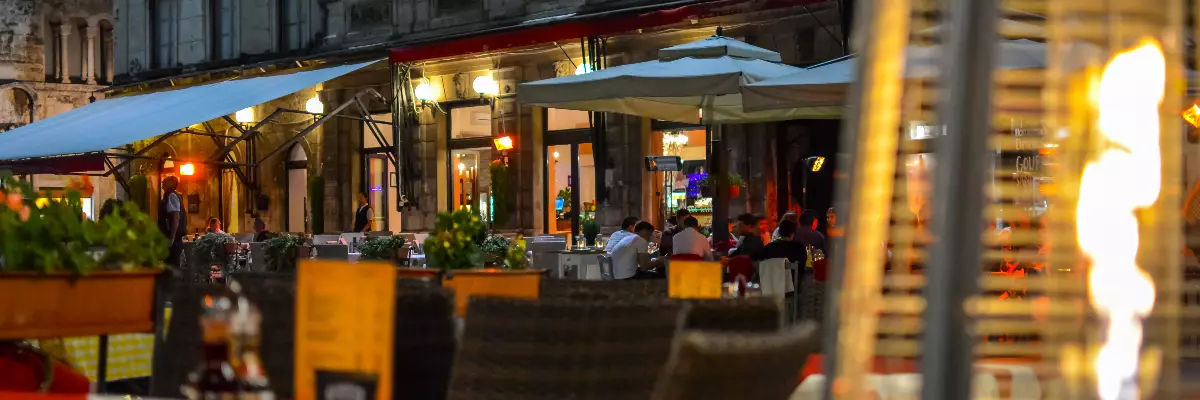
Wind is usually the factor planners underestimate. A single commercial patio heater may cover a circle of roughly 4 to 6 metres in calm conditions, but exposed sites lose that benefit fast. For a covered outdoor area, spacing heaters every 4 metres is often workable. In open air, spacing closer to 3 metres gives a stronger result, especially if wind moves through the area from more than one side. Windbreaks, screens and sidewalls can improve comfort as much as adding another heater.
Guest behaviour matters too. People standing with drinks in their hands feel the cold faster than seated diners wrapped into a full event setting. A queue outside toilets or a cloakroom also needs attention because guests stop moving there. If one side of the venue attracts the crowd, move the heat budget there rather than distributing it evenly across empty space.
Heaters only help if they stay running. Gas mushroom heaters need a fuel plan, not just a unit count. One 11kg propane cylinder typically lasts 8 to 12 hours depending on the setting, so the duration of the event should shape how many bottles you order. A short evening reception may only need one bottle per unit. A full-day event or a late finish may need spares on site so staff can switch over without the heat dropping out halfway through service.
Jet heaters also consume significant fuel, so it is worth checking the product data sheet before final numbers are fixed. We supply LPG cylinders alongside our patio heater hire units, which makes it easier to keep the order together.
Electric infrared heaters and gas heaters solve different problems. Electric models are usually the better choice in enclosed or partly enclosed outdoor spaces because they do not rely on burning fuel in the same way and they deliver instant directional heat. They suit marquees, covered terraces and pergolas where the structure helps hold people within range of the heat source. Gas heaters are more useful in open air, where heat disperses quickly and higher output matters more than precision.
Your venue may decide the choice for you. If power access is limited or the load is already committed elsewhere, gas becomes more practical. If the venue restricts fuel-burning equipment in a certain area, electric may be the only realistic route. Always check this before you finalise the order.
Heating equipment needs space around it and clear operating rules. Never run gas or fuel-burning heaters inside fully enclosed spaces without proper ventilation because carbon monoxide risk remains high. Keep heaters at least 1 metre away from fabrics such as marquee walls, drapes and tablecloths. Put mushroom heaters on level, stable ground so they cannot rock or tip. If you are planning overhead infrared heaters, confirm the fixing points with the marquee or venue team before the day of delivery. Position matters as much as the heater itself.
Before you book, walk the site on the coldest version of the day you expect guests to use it. Note where queues form, where people stand with drinks, where the wind cuts through and where the power points or gas-safe locations sit. That quick check usually shows whether you need a few high-output units in key positions or a larger number of smaller heaters spread through the space. It also helps you avoid paying for heat in dead areas while leaving busy zones underpowered.
Heaters are only one part of an outdoor or marquee plan, so order them alongside the rest of the layout rather than as a last-minute add-on. You may need power cabling, gazebo cover, sidewalls or other items from the outdoor event hire catalogue to get the best result from the heating setup. Give the delivery team clear access information and let them know if the site has steps, gravel, soft ground or restricted vehicle access. Once the equipment type, quantity and fuel or power plan are clear, you can add the heaters to your basket and confirm the dates online with far more confidence.
Choose from our vast range of catering hire, furniture hire and exhibition hire products. Select from the categories listed below or use our great search function above.