Keeping food at the right temperature across a service period needs the right equipment and a clear holding plan. This guide covers chafing dishes, bain maries, hot boxes, and the cook-then-hold approach.
Keeping food at the right temperature across a service period needs the right equipment and a clear holding plan. This guide covers chafing dishes, bain maries, hot boxes, and the cook-then-hold approach.
Keeping food at serving temperature across a catering service is one of the more overlooked parts of event planning. Chafing dishes and bain maries look similar but work differently, and choosing the wrong one for a given food type causes quality problems. Getting this right also matters for food safety: food held below 63°C enters the danger zone where bacteria multiply.
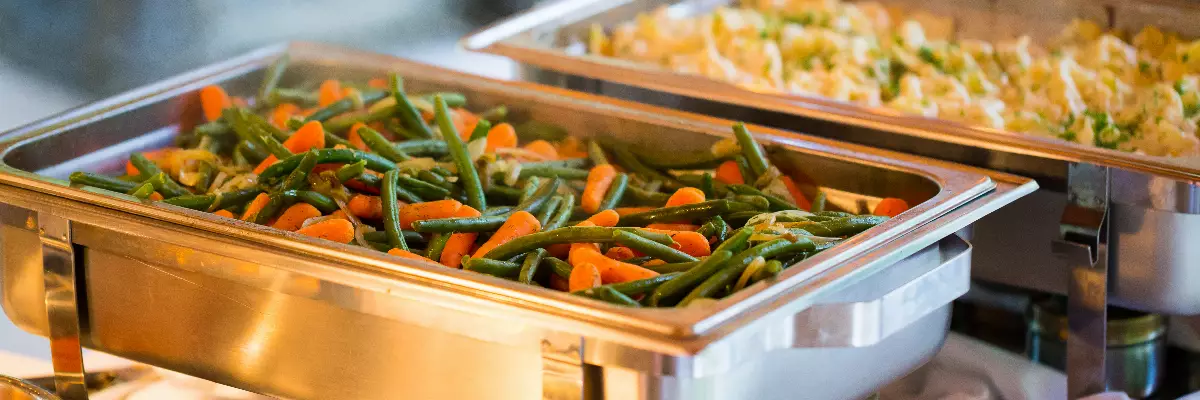
Chafing dishes are the standard choice for buffet service. They sit on a frame above a tray of water or dry fuel, with the food in a perforated or solid pan above the heat source. Wet heat (water in the bottom tray) creates a gentler, more even temperature distribution and is better for sauces, rice, and anything that can dry out or scorch. Dry heat (fuel only, no water) is faster to set up and reaches temperature more quickly, but risks hot spots at the base of the pan. For most buffet foods, wet heat is the safer choice.
A standard rectangular chafing dish holds a full hotel pan (530 x 325mm), which is enough for 20 to 30 portions of a main course item. For a buffet serving 100 guests with a two or three-hour window, plan for two chafing dishes per hot dish: one in service and one being replenished in the back.
A bain marie is a countertop or freestanding unit that holds food in hot water, maintaining temperature across multiple dishes at once. It is better suited to a fixed service point than a self-service buffet. Banqueting-style bain maries with multiple sections allow the catering team to hold soups, sauces, and side dishes at the correct temperature without individual fuel burners for each container.
Electric bain maries need a mains supply, which affects where they can be positioned at outdoor events. Gas bain maries are available but less common for hire. Browse our warming equipment hire range for bain marie options.
Hot boxes are insulated containers used to transport and hold food after cooking. Food is loaded hot and stays warm inside the insulated box without additional fuel or power. A well-insulated hot box keeps food above 63°C for two to three hours, depending on the ambient temperature and how full the box is. They are good for transporting food to outdoor events with no power supply, or for holding pre-plated dishes before service starts.
Hot cupboards are electric and suitable for venues with power. They hold food at a set temperature and are better for longer hold periods than a hot box, since they actively maintain temperature rather than relying on insulation.
The cook-then-hold approach is simple: cook the food to above the required serving temperature, then hold it in warming equipment until service. The key is the timing gap between cooking and serving. For a buffet opening at 7pm, food cooked at 5pm and held in a well-managed bain marie or hot box at 75°C will still be safe and at the right temperature at service. Food cooked three or more hours before service and held poorly will have quality problems regardless of the temperature.
Plan the cook-then-hold window with the caterer before the event. For events where the catering team is working in a remote or temporary kitchen, the holding plan matters as much as the cooking plan.
Food should be held at or above 63°C during service. Check this with a probe thermometer at the start of service and at regular intervals during a long service window. Our cooking equipment hire range includes commercial burners and hotplates for on-site cooking alongside the warming equipment needed to hold food at service temperature.
Choose from our vast range of catering hire, furniture hire and exhibition hire products. Select from the categories listed below or use our great search function above.