Getting cups and saucers right for events means choosing the right cup type, deciding whether saucers are needed, and calculating quantities based on how service is structured. This guide covers all three.
Getting cups and saucers right for events means choosing the right cup type, deciding whether saucers are needed, and calculating quantities based on how service is structured. This guide covers all three.
Cup and saucer orders for events seem simple until you start thinking about how service actually works. A tea station serving 200 guests in rotation needs a different quantity from an afternoon tea where all 200 guests are seated and served at once. The cup type, the saucer decision, and the service structure all affect what you need to order.
Teacups hold between 180ml and 220ml and are the standard for tea service at events. They have a traditional profile, usually with a matching saucer as part of the set, and suit afternoon teas, wedding breakfasts with a tea service, and any event where the tea service is a deliberate part of the occasion rather than a functional refreshment stop.
Coffee cups (also called café cups or breakfast cups) hold between 100ml and 150ml. They are shorter and wider than teacups and suit filter coffee, americanos, or any hot drink served without milk being added in the cup. They can be used with a saucer but are often served without one in a standing or self-service setting.
Espresso cups hold 60 to 80ml and require a small saucer to function correctly. They are for espresso service only. If you are hiring espresso cups for a coffee service at an event, check whether the coffee equipment being used actually produces espresso or an americano-style drink. Serving a 150ml drink in a 70ml cup creates a problem on the day.
Browse our cups and saucers hire range for available styles.
Saucers are needed for any formal or seated tea or coffee service where the cup will be placed on a table. Without a saucer, the cup has no clean resting place and the table surface gets marked. For afternoon tea, a wedding breakfast tea service, or any event where the hot drinks are served at the table, matching saucers are part of the hire order.
For a self-service station where guests pick up a cup and stand, saucers are less necessary and can add confusion. Guests at a standing coffee station tend to carry their cup in one hand and rarely want to manage a saucer as well. A cup without a saucer is fine in this context.
A tea station with an urn or brew-to-order setup and a staggered service (guests visiting throughout the event rather than all at once) needs fewer cups than a simultaneous service. For a 200-guest event with a tea station, 80 to 100 cups is enough if the station is in continuous use across a 90-minute window and clean cups are available as others are collected. This assumes cups cycle through a wash every 30 to 40 minutes.
If washing is not possible during the event, order one cup per guest with a 10% buffer. For 200 guests, that is 220 cups. Add the saucers in the same quantity if the service requires them.
Afternoon tea is a simultaneous service: all guests are seated and all cups are needed at the same time. Order one cup per guest with a 10% buffer. For 50 guests, order 55 cups and 55 saucers. For 100 guests, order 110 of each. There is no scope to run short at an afternoon tea service because there is no time to wash and reuse during service.
Our beverage equipment hire includes urns, hot water boilers, and the serving equipment needed alongside the cups and saucers for a complete tea or coffee service setup.
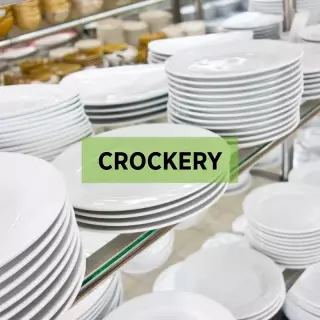
If the event uses hired crockery for a full table setting, match the cup style to the plate and bowl range where possible. A mixed crockery table looks unintentional. For events where the tea service happens after the main meal at the same table, matching the cups to the existing crockery is a small detail that makes the table look considered throughout the full service.
Choose from our vast range of catering hire, furniture hire and exhibition hire products. Select from the categories listed below or use our great search function above.