<p>Giant Jenga is the most-hired outdoor game we stock. The blocks start at 45cm, and the tower reaches well over a metre by the time a game gets competitive. This guide covers what we stock, the space each game needs, and which events they suit.</p>
<p>Giant Jenga is the most-hired outdoor game we stock. The blocks start at 45cm, and the tower reaches well over a metre by the time a game gets competitive. This guide covers what we stock, the space each game needs, and which events they suit.</p>
Garden games work best when the event has space to breathe and guests have time to move around. They are not there to fill every minute of the schedule. They are there to give people something easy to do between the main moments of the day. That is why they suit drinks receptions, summer parties, school fetes, village events and corporate away days better than tightly structured dinners or indoor functions with fixed seating.
Giant Jenga and giant chess do different jobs within that kind of event. Giant Jenga gives you quick, active play with very little explanation. Giant chess gives you more visual impact and a stronger centrepiece effect, even when fewer guests actually play. If you choose the game that matches the mood and the space, both can add value without taking over the venue.
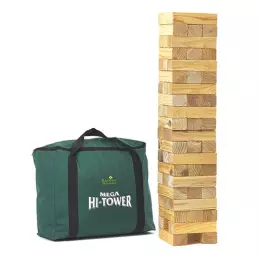
Giant Jenga needs roughly a 1.5m × 1.5m clear area: a patio section or flat lawn works well. Setup takes two minutes and the game runs itself. The tower starts at around 45cm and climbs past a metre as the game progresses.
That makes Giant Jenga useful for events where you want a game people can join for a few minutes at a time. Guests do not need a long explanation or a set booking slot. They spot it, start playing and move on when the next part of the event begins. That works particularly well at wedding drinks receptions, family gatherings and outdoor corporate events where people are waiting for food, photos or the next scheduled activity.
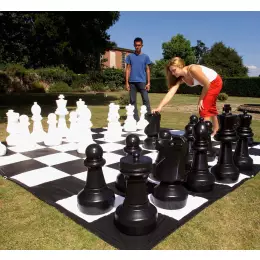
Giant chess takes more space and delivers more visual impact than active gameplay. A full set needs at least 2m × 2m and attracts attention throughout the event, but fewer people play it than stand and watch. It works well at corporate team days as a centrepiece, and at outdoor wedding drinks receptions where not everyone wants an active game.
That centrepiece quality is a big part of its value. Giant chess gives the event a visual talking point even when only a small number of guests use it at any one time. It can suit venues where you want one or two games that look strong in photos and help define a relaxed outdoor area without turning the whole space into a sports zone.
Garden games suit events where guests move freely and the mood is relaxed. Corporate away days, summer parties, school fetes, village fetes and outdoor wedding receptions are the most common bookings. The games fill gaps: waiting for food, a drinks reception, time between scheduled activities.
That “gap-filling” role matters. Games work best when they support a social event rather than compete with it. If the event already has a full programme every minute, guests may not use them much. If the event includes natural pauses, circulation and informal conversation, games can keep the atmosphere lively without requiring staffing or complex instructions.
They don't suit small or formal spaces. If the venue is indoors, if guests will be seated most of the time, or if the event is a formal dinner, games add no value and use floor space that could be better used. For indoor events, giant chess can work as a static display if the floor is level and you have the space.
That is often the right way to judge them. Ask whether the event is asking guests to roam, pause and interact casually. If the answer is yes, games can work well. If the event is built around fixed seating, speeches or formal dining, they usually become background clutter rather than a real feature.
Both games need flat, firm ground. Soft or uneven grass slows gameplay and the chess pieces become unstable. Hard landscaping — paving, decking, concrete — is ideal. For marquee events, both games can run inside if the flooring is level.
Surface quality matters more than many organisers expect. A generous patch of lawn may still be a poor choice if the ground is uneven or soft underfoot. Guests are far more likely to use the games if they can approach them easily, move around them safely and set drinks down nearby without worrying about mud or wobbling pieces.
Giant Jenga: 1.5m × 1.5m minimum.
Giant Chess: 2.5m × 2.5m minimum, including room for players to move.
Those clearances should stay genuinely clear. Do not squeeze the games into circulation routes, dining spill areas or places where guests have to crowd around the edges of other activity. They need enough room to feel inviting and safe, especially once several people gather to watch or take part.
Most outdoor game orders come alongside furniture or catering hire. We deliver everything together in one vehicle to one time slot. Giant Jenga and chess arrive assembled. We collect everything at the end of your hire period.
That combination often makes the event easier to plan because the games become part of the wider outdoor setup rather than a separate supplier conversation. If the space already includes poseur tables, seating, catering equipment or a marquee area, the games can sit naturally within that layout as long as you leave enough room around them.
The most successful setups usually place games near social areas rather than in isolated corners. If guests can see the game from the bar, drinks area or reception space, they are more likely to use it. If the game sits hidden away behind service areas or too far from the main flow, it will have less impact no matter how good it looks.
For current stock and pricing, see our garden games hire page.
Choose from our vast range of catering hire, furniture hire and exhibition hire products. Select from the categories listed below or use our great search function above.