<p>A standard 750ml bottle of champagne pours 6 glasses at the standard 125ml serve. Order too few and the toast runs dry before the speeches finish.</p>
<p>A standard 750ml bottle of champagne pours 6 glasses at the standard 125ml serve. Order too few and the toast runs dry before the speeches finish.</p>
A standard 750ml bottle of champagne pours 6 glasses at the standard 125ml serve. That is the working number most venues, bartenders and planners use, and it applies to prosecco and sparkling wine too when the serve size stays the same. If you start your drinks planning from that figure, you can work back to a sensible bottle count without guessing.
The number matters because champagne for a toast looks simple until you apply it to a real guest list. Once you add the headcount, the style of service and the chance of a few heavier pours, small errors scale up fast. One short case of bottles can leave the last tables waiting. A large over-order can tie money up in stock you did not need. Good drinks planning starts with the pour size, not the label on the bottle.
750ml divided by a 125ml serve gives 6 glasses. That is the cleanest planning number for most events. Some venues pour 100ml for a toast, which stretches a bottle to 7 or 7.5 glasses. Others pour 150ml, which drops the count to 5. The bottle has not changed, only the pour size has. Once you know the serve size, the rest of the calculation becomes straightforward.
| Glass size | Glasses per bottle |
|---|---|
| 100ml | 7.5 |
| 125ml (standard) | 6 |
| 150ml | 5 |
If you want clean control, agree the serve size with whoever is pouring. A planned 125ml toast can slip into 150ml under pressure if staff are free-pouring and moving quickly. That change does not sound large, but over several bottles it cuts your yield and changes the number you need on the order.
For a single toast, divide the guest count by the number of glasses per bottle. A 100-guest toast at 125ml works like this: 100 divided by 6 equals 16.7, so you round up to 17 bottles. That gives one standard glass per guest. Then add a margin for spills, heavier pours and the few glasses that need topping up because the first pour landed short. In that example, a 10% margin takes you to 19 bottles.
Rounding up is not wasteful in this context. Bottles do not divide cleanly against guest counts, and service never runs in laboratory conditions. You may lose a little to foam, you may need one bottle opened before the full group gathers, and staff may not split the last bottle evenly across the final glasses. A small buffer protects the toast.
A toast and a reception need two different calculations. A toast needs one glass per guest. A drinks reception where sparkling wine flows for an hour or more needs 2 to 3 glasses per guest, sometimes more if champagne is the main feature of the bar. The bottle count should follow the event format, not the headline guest number on its own.
Take the same 100-guest event. For a single toast, you plan around 100 glasses. For a reception at 2 glasses per guest, you plan around 200 glasses. At 6 glasses per bottle, that means roughly 34 bottles before margin. At 3 glasses per guest, you move to 50 bottles before margin. That is why “how many bottles for 100 guests?” is never a useful question on its own.
Tray service, table service and bar service all change how stock moves. With tray service, staff often pour in batches before entering the room, which makes control easier if the event only needs one round. With bar service, guests may come back for another glass if the reception lasts longer or the room runs warm. With table service at a wedding breakfast, open bottles on tables can lead to more generous top-ups than a staffed toast line would allow.
Timing matters too. A toast at the end of a ceremony usually works with tight control because everyone drinks together. A welcome reception before dinner has more drift. Early arrivals may drink before late guests come in, and staff may keep pouring while the room fills.
Order more glasses than the strict guest count. A 10% buffer gives you enough stock for breakages, re-pours and glasses that get cleared before the next round. That keeps guests from standing empty-handed while staff hunt for washed stock or pull glasses from another station.
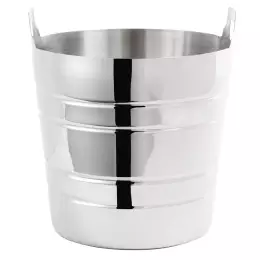
A champagne bucket also helps if bottles need to stay cold tableside or at a service point without repeated trips back to the bar. That matters most at wedding top tables, hospitality settings and receptions where sparkling wine is part of the presentation as well as the drinks service.
The first mistake is counting guests and forgetting the serve size. The second is planning for one glass when the event brief really describes a reception. The third is ordering the right number of bottles but not enough flutes. Another common problem is assuming all bottles pour the same way regardless of who is serving. If one team member pours large measures, the stock disappears faster than the spreadsheet predicted.
Browse our glassware hire range for champagne flutes and saucers in standard and crystal finishes, or get in touch if you need help sizing an order for your guest count.
Choose from our vast range of catering hire, furniture hire and exhibition hire products. Select from the categories listed below or use our great search function above.